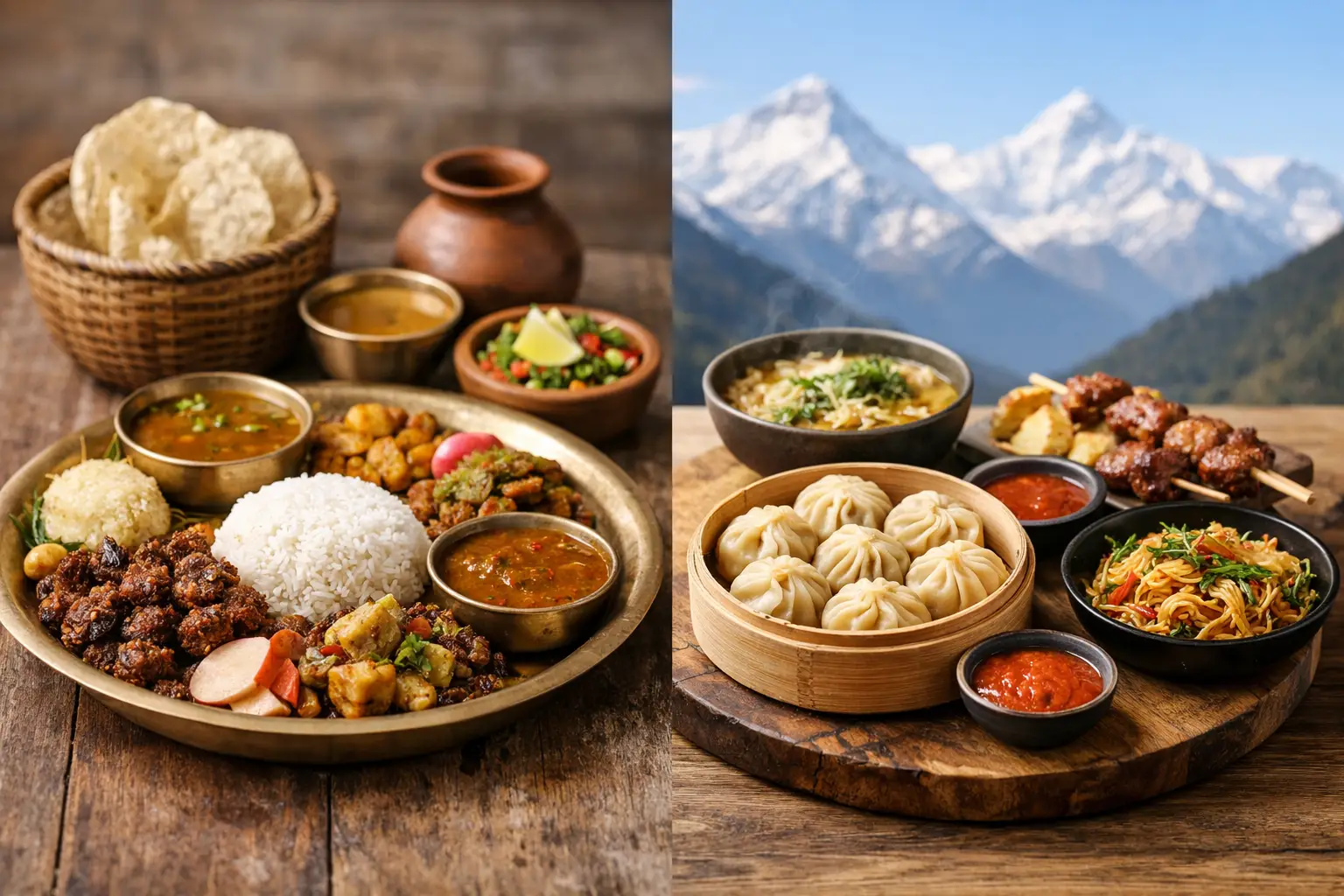

A plate of momos may be the first taste many visitors associate with Nepal, but it tells only part of the story. Newari cuisine vs Himalayan cuisine is not a contest between two unrelated food traditions. It is the difference between a deeply specific culinary culture and a broad family of mountain foodways shaped by altitude, trade, climate, and community.
For diners who love food with real character, knowing that difference makes ordering more rewarding. You can recognize why one dish feels celebratory and richly layered, while another is simple, warming, and built to sustain people through cold mountain weather.
Newari Cuisine vs Himalayan Cuisine: The Main Difference
Himalayan cuisine is an umbrella term. It can refer to foods from Nepal, Tibet, Bhutan, northern India, and neighboring mountain regions. While each area has its own traditions, many Himalayan dishes share practical roots: ingredients that travel well, warming spices, grains, soups, dumplings, preserved foods, and comforting combinations of meat or vegetables with rice or flatbreads.
Newari cuisine, by contrast, comes from the Newar people of Nepal’s Kathmandu Valley. It is one of Nepal’s most distinctive and detailed food traditions, shaped by centuries of farming, trade, craftsmanship, festivals, and family gatherings. Newari food is often bold, aromatic, and textural, with dishes designed to be enjoyed together rather than rushed through.
Think of Himalayan cuisine as the larger landscape. Newari cuisine is one treasured region within it, with its own language of flavor, ingredients, rituals, and hospitality.
Himalayan Food Is Built Around Place
The Himalayas are not one uniform place, so there is no single Himalayan menu. A dish from the Kathmandu Valley will not taste exactly like one from Tibet, Sikkim, Ladakh, or Bhutan. Still, the mountain environment creates some familiar patterns.
Cold temperatures and high elevations have traditionally favored hearty staples. Rice is common in many areas, while barley, buckwheat, millet, and wheat become especially important in colder or higher regions. Lentils, potatoes, leafy greens, beans, yak or buffalo meat in certain areas, chicken, goat, and dairy all appear in different forms depending on local availability and cultural customs.
Soups, broths, dumplings, noodles, and slow-cooked curries make sense here. They are filling, practical, and comforting. Spices add warmth, but Himalayan food is not automatically extremely hot. Many dishes are fragrant rather than fiery, using ginger, garlic, cumin, coriander, turmeric, chilies, timur pepper, and regional spice blends to create depth.
Momos are a perfect example of this wider Himalayan influence. These steamed or fried dumplings are beloved across Nepal and beyond, but their fillings, dipping sauces, and seasonings vary from place to place. They are familiar enough for first-time diners and varied enough to reward repeat visits.
What Makes Newari Cuisine So Distinctive?
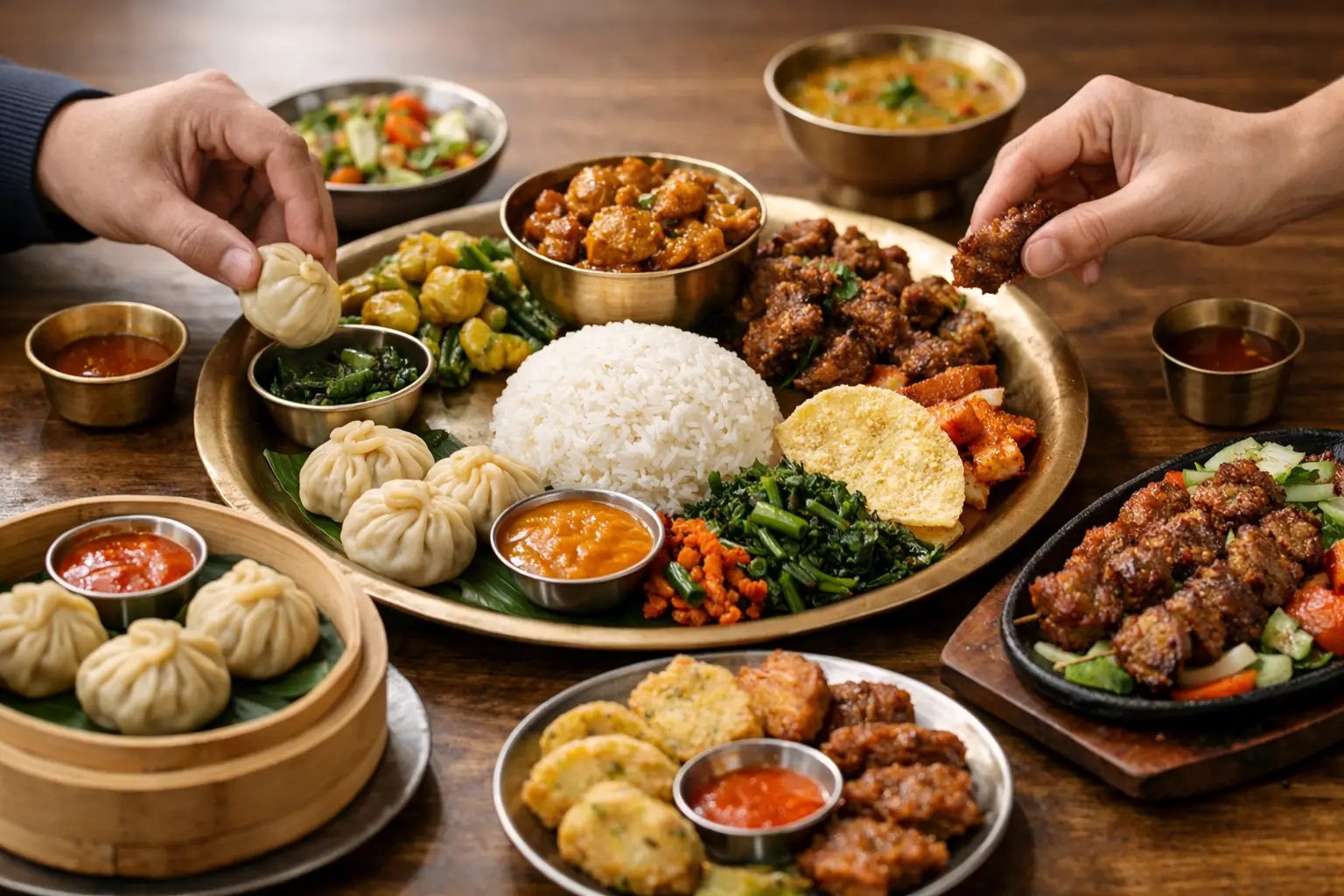
Newari food often feels more ceremonial, more layered, and more playful with texture than diners expect. It is known for balancing savory, smoky, tangy, spicy, and fermented notes on the same table. Rather than centering a meal around one large entree, Newari dining frequently invites people to sample several small dishes alongside rice, beaten rice, pickles, legumes, meat, and vegetables.
A classic Newari feast can include chiura, or beaten rice, with spiced meat, beans, pickles, fried soybeans, potatoes, and seasonal vegetables. The combination is hearty, but every component has a role. The crispness of chiura, the richness of meat, the brightness of achar, and the heat of chilies keep each bite interesting.
Newari cuisine also has a strong connection to celebration. Festivals, family milestones, religious occasions, and community gatherings each bring their own dishes and serving customs. Food is not simply placed on the table. It carries memory, generosity, and respect for guests.
Signature Flavors and Ingredients
Mustard oil is a defining flavor in many Newari dishes, bringing a pungent, lively edge that stands apart from the creamier profiles some diners expect from Indian cuisine. Garlic, ginger, cumin, coriander, fenugreek, turmeric, chilies, and timur pepper are also common, but the goal is balance rather than spice for its own sake.
Fermentation matters, too. Pickled vegetables and fermented preparations add acidity and complexity, cutting through rich meats and fried foods. This is one reason a Newari platter can taste so complete: it offers heat, richness, crunch, freshness, and tang in a single shared meal.
Meat dishes are especially prominent in Newari cooking. Goat, chicken, buffalo, pork, and fish may be prepared with carefully toasted spices, garlic, herbs, and chilies. At the same time, vegetarian dishes are far from an afterthought. Black-eyed peas, soybeans, potatoes, mushrooms, greens, and lentils can carry just as much flavor and personality.
The Role of Rice, Beaten Rice, and Bread
One easy way to notice the difference is to pay attention to the starch on the plate. Across Himalayan cuisines, rice, noodles, barley, buckwheat, and breads all have a place. In Newari cuisine, beaten rice is particularly iconic.
Chiura is made by flattening parboiled rice into light, crisp flakes. It may sound simple, but it changes the experience of a meal. Served with spiced meats, pickles, and legumes, it offers a clean crunch that absorbs flavor without becoming heavy. It is a practical staple, but it is also part of the identity of many Newari meals.
Rice can be the better choice when you want a saucier curry or a comforting everyday plate. Beaten rice is ideal when you want contrast and a more traditional Newari-style spread. Neither is better in every situation. It depends on the dish and the kind of meal you want to enjoy.
Spice Level Is Not the Same as Flavor
Guests sometimes assume Himalayan or Newari food must be very spicy. The truth is more inviting: these cuisines are flavorful first. Heat can often be adjusted, while the essential character of the dish comes from toasted spices, aromatics, pickles, herbs, and slow-cooked ingredients.
For diners who prefer mild food, steamed momos, lentil dishes, vegetable curries, and gently seasoned rice plates can be a comfortable starting point. Those who enjoy a stronger kick may appreciate chili-rich pickles, spicy grilled meats, or dishes that highlight timur’s distinctive citrusy tingle.
The best approach is to share your preference. A thoughtful kitchen can guide you toward flavors that feel exciting without overwhelming your palate. That is especially helpful for families or groups where everyone has a different comfort level with spice.
How to Order for a First Newari or Himalayan Meal
Start with a familiar point of entry, then add one dish that feels new. Momos are a natural choice because they are easy to share and pair well with a bright dipping sauce. Follow them with a curry, grilled meat, or vegetable dish, then choose rice or beaten rice depending on the style of meal you want.
If you are specifically curious about Newari cuisine, look for a dish with chiura, spiced meat, legumes, and achar. That combination introduces several essential elements at once. A mixed selection is often more satisfying than ordering only one heavy entree because Newari food shines through contrast.
For a group, order with variety in mind. Choose one mild dish, one medium-spiced dish, a vegetable option, momos, and a starch for sharing. This lets every guest find a favorite and turns dinner into a more generous experience.
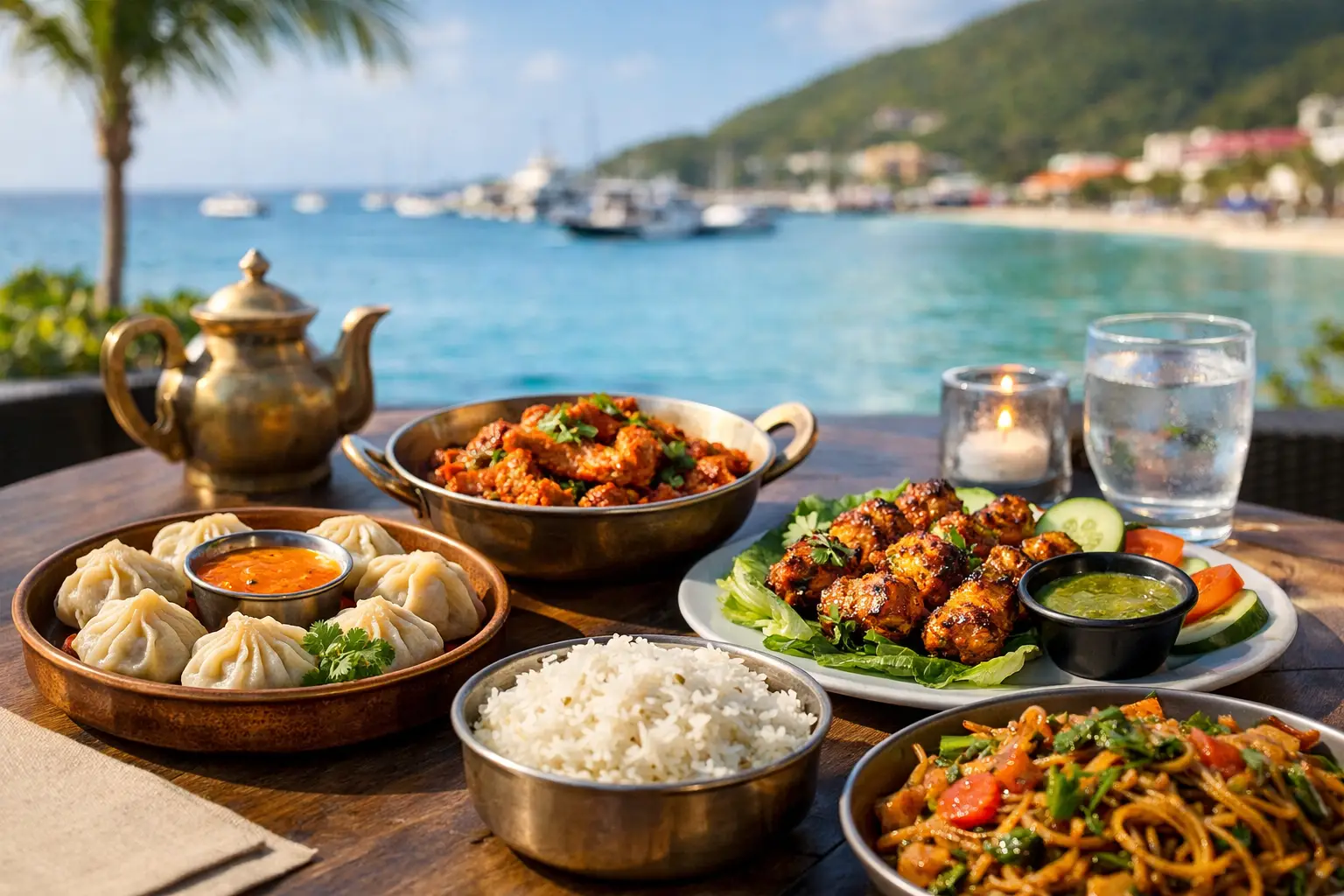
A Taste of Nepal in St. Maarten
At Newa Chopstix, the pleasure is in experiencing these traditions at your own pace. A menu that brings together Nepalese, Newari, Indian, and Indo-Chinese favorites gives families, couples, and curious travelers room to start familiar and explore further. You might come for momos and leave with a new appreciation for the bright pickles, spiced meats, and shared plates that make Newari cooking memorable.
The most rewarding meal is not necessarily the hottest dish or the one with the longest name. Choose a plate that sparks your curiosity, ask for the spice level that suits you, and leave room at the table for something you have never tried before.