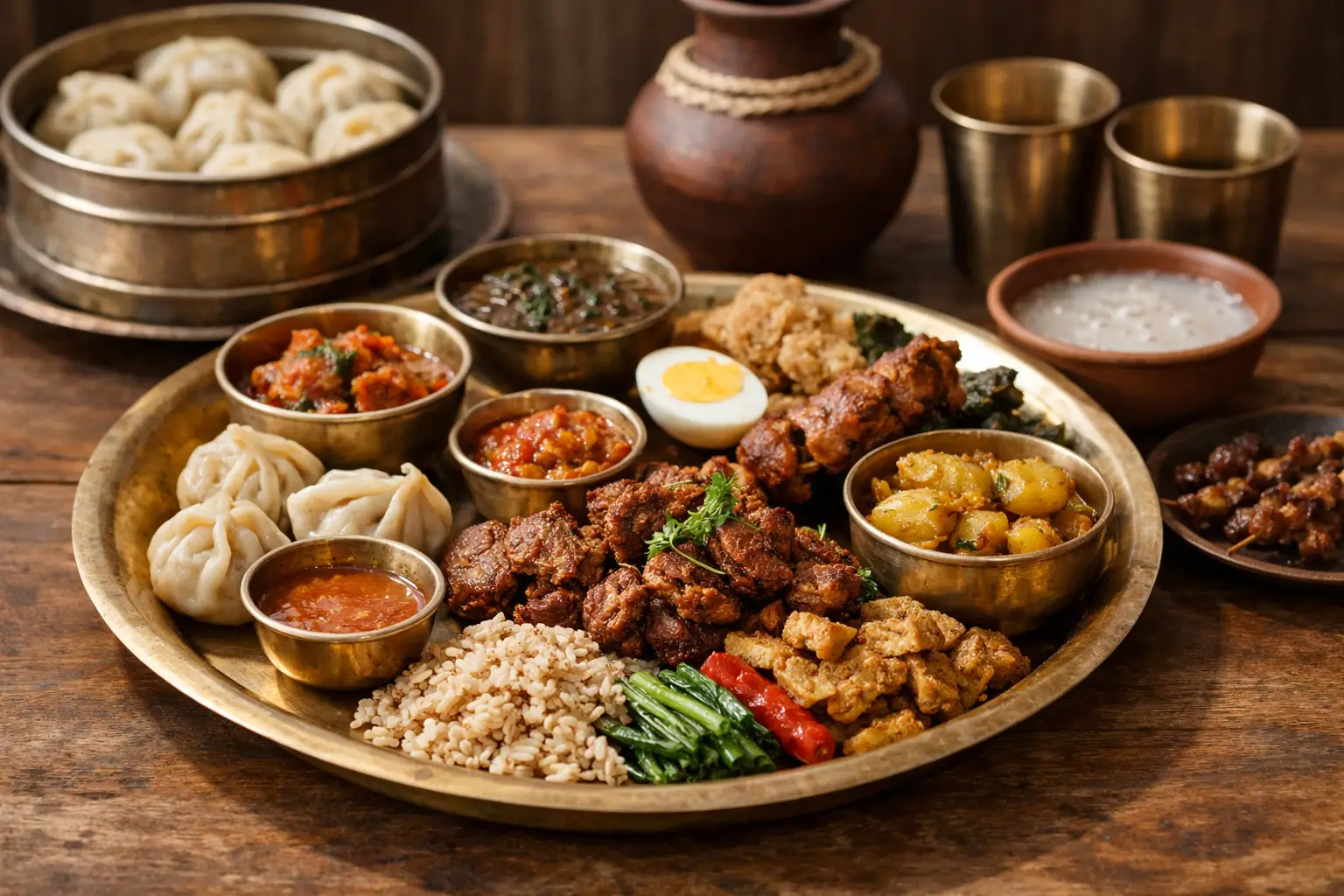

The first time you see a Newari spread, it does not look like a single-note meal. It looks like a table built for sharing – grilled meats, beaten rice, slow-cooked lentils, pickles, herbs, warm spices, and dishes that move from comforting to bold in a few bites. This guide to Newari cuisine is here to make that first experience easier, more delicious, and a lot more memorable.
Newari cuisine comes from the Newar community of the Kathmandu Valley in Nepal, and it holds a special place in the country’s food culture. While many diners are already familiar with popular Nepalese dishes like momo, Newari food offers something deeper and more layered. It is festive, textured, and often built around contrast – smoky and fresh, rich and tangy, hearty and bright.
For guests discovering Himalayan food in a Caribbean setting, that balance is part of the appeal. Newari cuisine feels authentic and exciting, but it is also welcoming. You do not need to know every traditional name to enjoy it. You only need a little guidance on what to expect.
What makes Newari cuisine different
Newari food is known for strong identity and careful preparation. It is one of the most distinctive regional traditions in Nepal, with dishes tied closely to family gatherings, community feasts, and celebrations. That heritage matters because these are not random recipes grouped under one label. They belong to a cuisine with its own rhythm, ingredients, and style of serving.
One of the biggest differences is variety on a single plate or table. A Newari meal often brings together meat, lentils, grains, pickles, and vegetable dishes in ways that create contrast rather than repetition. Instead of one dominant sauce covering everything, each item keeps its own personality.
Texture plays a big role too. You may get tender meat next to crisp beaten rice, a soft lentil preparation beside a sharp pickle, or a grilled item paired with something cooling and herbal. If you enjoy meals that keep changing from bite to bite, Newari cuisine does that especially well.
A guide to Newari cuisine flavors
If you are wondering what Newari food actually tastes like, the best answer is this: balanced, savory, aromatic, and sometimes pleasantly intense. It can be spicy, but spice is only one part of the picture.
Common flavor notes include cumin, coriander, garlic, ginger, fenugreek, turmeric, sesame, and mustard oil. Some dishes lean smoky from grilling or pan-roasting. Others pick up brightness from fresh herbs, chilies, or pickled elements. There is often an earthy depth that comes from lentils, slow-cooked meats, and traditional spice blends.
For first-time diners, this means you should not expect every dish to taste like Indian curry or Indo-Chinese stir-fry. There may be some familiar ingredients, but the final result is different. Newari cuisine tends to be less about heavy cream or sweet sauces and more about depth, contrast, and a satisfying savory finish.
That said, spice levels can vary. Some plates are very approachable for mild eaters, while others have more chili heat and sharper fermented or pickled notes. If you usually prefer food on the gentler side, it helps to ask for guidance rather than ordering only by name.
Signature dishes worth knowing
A practical guide to Newari cuisine should start with the dishes that define it. Even if menu offerings vary from one restaurant to another, a few categories appear again and again.
Choila is one of the best-known Newari dishes. It is usually made with grilled or roasted meat, most often chicken or buffalo in traditional settings, then mixed with spices, herbs, and chili. The flavor is smoky, bold, and lively. It is a great pick if you like food with character.
Chatamari is sometimes compared to a rice crepe or a very thin savory flatbread, but it is best understood on its own terms. Made from rice flour, it can be served plain or topped with meat, egg, or vegetables. It is light in structure but full of flavor, which makes it a good entry point for diners who want something familiar in form but different in taste.
Bara is a lentil-based pancake that can be served plain or with toppings. It is soft, savory, and deeply satisfying. Some guests enjoy it as a snack, while others treat it as part of a larger shared meal.
Yomari is the dish many people remember for dessert or a festive finish. This traditional dumpling is made from rice flour and filled with sweet ingredients such as jaggery or sesame. It offers a softer, gentler side of Newari cuisine and shows that the tradition is not only about heat and spice.
You may also come across beaten rice, often served as a side or base in Newari meals. It adds texture and is especially good with grilled or spiced meats. Lentil dishes, pickles, and vegetable preparations round out the experience and give the meal its layered feel.
What to order if it is your first time
The best first Newari meal usually includes a little range. Rather than committing to one large dish and hoping for the best, it often makes sense to try a few items with different textures and intensities.
Start with one grilled or spiced meat dish if you enjoy savory flavors. Add a starch like beaten rice, chatamari, or bara so the meal feels balanced. Then include one pickle, lentil dish, or vegetable side to bring in the contrast that makes Newari cuisine so enjoyable.
If you are dining with family or friends, this cuisine rewards sharing. One person may prefer milder dishes, while another wants more chili and smoke. Ordering across the menu lets everyone find their comfort zone without losing the fun of trying something new.
For families, the good news is that not every Newari dish is fiery. Children and cautious eaters can still enjoy softer textures, grilled items, rice-based dishes, and milder preparations. A good restaurant will help you adjust spice where possible and guide you toward dishes that fit your table.
Spice, tradition, and personal preference
One reason guests sometimes hesitate with regional cuisines is the fear of ordering something too intense. That concern is understandable, especially when you are traveling or dining with a mixed group. Newari cuisine can be bold, but bold does not always mean overwhelming.
Some traditional dishes are meant to have edge – more chili, more garlic, more tang from pickles or fermentation. That is part of their charm. At the same time, a thoughtful dining experience should meet guests where they are.
It depends on what you enjoy. If you love layered heat and strong savory flavors, go for the more classic, spice-forward dishes. If you prefer a gentler start, choose rice-based dishes, lentil preparations, or milder grilled items first. There is no wrong way to begin, as long as the meal still gives you a sense of the cuisine’s character.
At a place like Newa Chopstix, that balance between authenticity and guest comfort is part of what makes the experience approachable. You can taste the roots of the cuisine while still ordering in a way that suits your table.
Why Newari cuisine leaves an impression
Plenty of meals taste good in the moment. Fewer stay with you after the table is cleared. Newari cuisine tends to leave that stronger impression because it offers more than one experience at once.
There is comfort in the rice, lentils, and warm spices. There is excitement in the grilled meats, the pickles, and the sharper flavors. There is also a real sense of occasion in how the meal comes together. Even when served casually, it feels connected to celebration and hospitality.
That makes it especially appealing for travelers looking for something beyond standard tourist fare, and for local diners who want a meal that feels both genuine and special. You are not just ordering another familiar plate with a new label. You are stepping into a food tradition that has been shaped over generations and still feels alive with personality.
How to enjoy the experience fully
Come with curiosity, not pressure. You do not need to pronounce every dish perfectly or understand every regional detail before you order. Ask questions, mix familiar choices with new ones, and give the table room to share.
If you are pairing food with drinks, think about balance. Bold, savory dishes often work best with something refreshing and simple. If you are planning a full meal, leave room for contrast rather than ordering only rich items. Newari cuisine shines when the table has variety.
Most of all, let the meal unfold. Some cuisines are straightforward from the first bite. Newari food reveals itself over a little time – smoky here, tangy there, soft in one bite and crisp in the next. That is where much of the pleasure lives.
A good first meal with Newari cuisine should feel like being welcomed into something meaningful, not tested on what you know. Order with an open mind, trust the flavors, and you will likely leave already thinking about what to try next.