
The first time many guests ask what is Newari food, they are usually expecting a simple answer like spicy Nepalese food or a regional version of Indian cuisine. It is much more distinctive than that. Newari food is the traditional cuisine of the Newar people of the Kathmandu Valley in Nepal, and it is known for its deep flavor, careful preparation, festive spirit, and remarkable variety of meat, lentil, rice, and beaten rice dishes.
What makes it memorable is not just heat or richness. It is the balance. Newari cooking can be earthy, smoky, tangy, savory, and aromatic all in one meal. Some dishes feel hearty and comforting, while others are designed for celebration. For diners who enjoy authentic food with character, Newari cuisine offers something special – it feels rooted in history, but it still wins people over on the very first bite.
What Is Newari Food?
Newari food comes from the Newar community, one of the oldest cultural groups in Nepal. Their cuisine developed in the Kathmandu Valley over generations and became closely tied to festivals, family gatherings, religious traditions, and hospitality. That is why Newari food often feels generous. It is not only about feeding people. It is about welcoming them well.
Compared with some other South Asian cuisines, Newari food often puts more emphasis on texture, slow-cooked depth, and the contrast between fresh and preserved ingredients. You may find grilled meats, fermented elements, spiced lentils, flattened rice, pickles, and soups all appearing in the same meal. The result is layered and satisfying rather than one-note.
For guests new to Himalayan cuisine, it helps to think of Newari food as one of Nepal’s most celebrated culinary traditions. It shares certain ingredients with broader Nepalese cooking, but it has its own personality, techniques, and iconic dishes.
Why Newari Food Tastes So Different
A big part of Newari cuisine’s appeal is its use of spice as flavor, not just fire. Yes, some dishes can be hot, but the real charm comes from how spices are toasted, ground, and blended. Cumin, coriander, ginger, garlic, turmeric, chilies, mustard oil, fenugreek, and timur, a Nepalese pepper with a citrusy, tingling quality, all help build its signature taste.
Texture matters just as much as seasoning. Newari meals often combine crisp, soft, chewy, brothy, and charred components on one table. Beaten rice may be served with marinated meat. A warm lentil preparation may sit beside a bright pickle. A grilled item may be followed by a soothing soup. That variety keeps each bite interesting.
There is also a celebratory quality to the cuisine. Many traditional Newari foods are associated with feasts and special occasions, so the dishes are designed to feel abundant. That does not mean every plate is heavy. Some are light and bright, while others are rich and deeply savory. It depends on the recipe, the occasion, and the household or chef preparing it.
Classic Dishes That Define Newari Food
If you want to understand Newari food through the plate, a few dishes appear again and again.
Chatamari is one of the most recognized. Often described as a Nepalese rice crepe or pizza, it is made from a rice flour batter and topped with ingredients like minced meat, egg, or vegetables. The texture is part of the appeal – soft in some places, lightly crisp at the edges, and packed with flavor on top.
Bara, also called wo, is a savory lentil patty or pancake. It may be served plain or topped with egg or minced meat. It looks simple, but when done well, it is wonderfully satisfying, with a rich lentil flavor and a soft interior.
Choila is another favorite and a strong example of Newari boldness. This dish features grilled or smoked meat, traditionally buffalo in Nepal, though chicken or mutton versions are also common, mixed with spices, chilies, garlic, ginger, and mustard oil. It is intense, aromatic, and often one of the dishes that wins over adventurous diners quickly.
Yomari takes the cuisine in a sweeter direction. It is a steamed dumpling made from rice flour and filled with sweet ingredients such as molasses or sesame. It is especially tied to festivals and shows that Newari cuisine is not only about savory feasting.
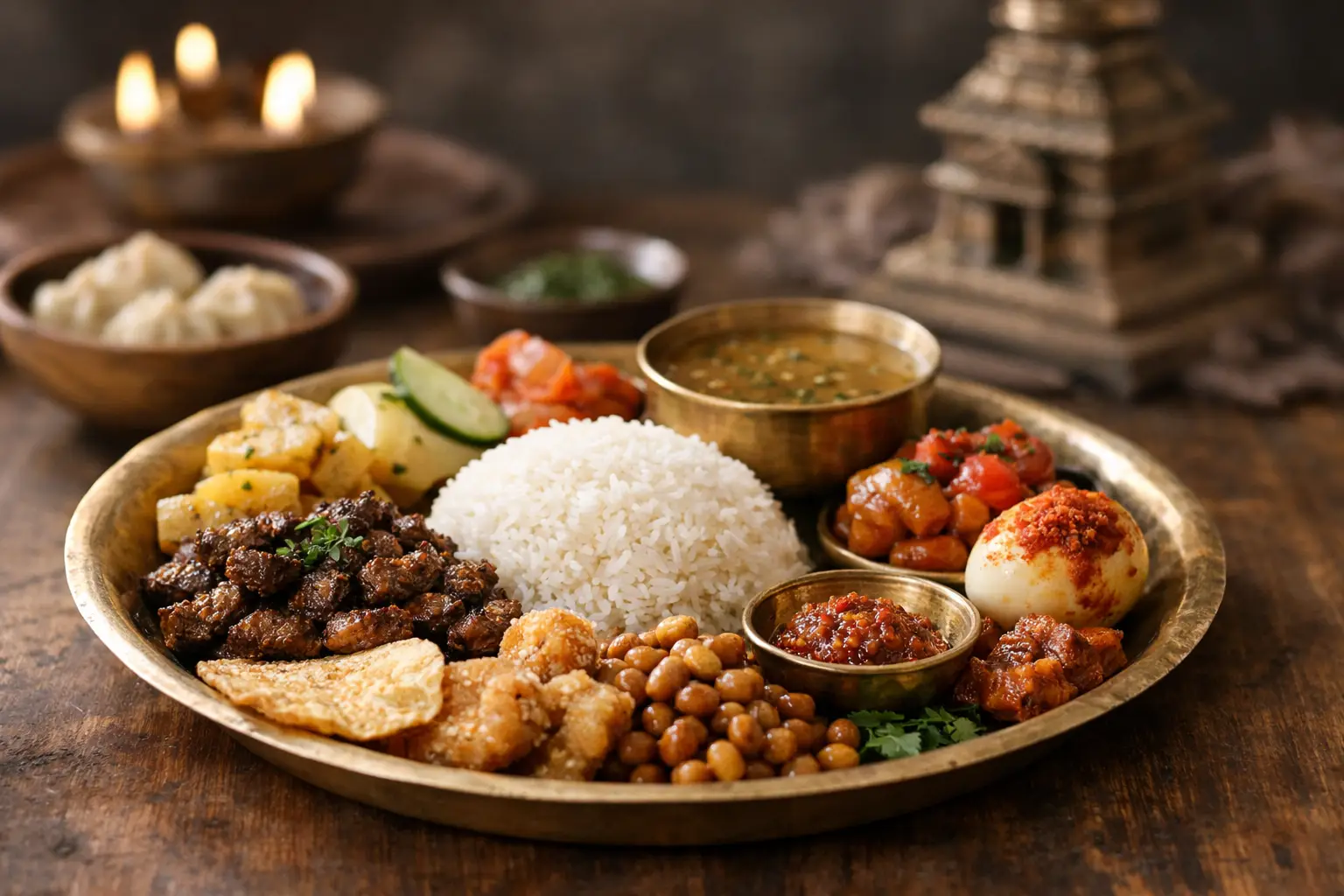
Then there is samay baji, which is less a single item and more a classic Newari assortment. It can include beaten rice, spiced meat, black soybeans, pickles, boiled egg, lentil cake, and other sides served together. It gives you a fuller picture of the cuisine because it brings many textures and flavors onto one plate.
What Is Newari Food Like to Eat?
For first-time diners, Newari food can feel familiar in some ways and surprising in others. If you enjoy Indian food, you may recognize certain spices, but the final taste is different. If you have tried Tibetan or broader Nepalese dishes, you may notice some overlap, yet Newari cuisine still stands apart because of its stronger use of smoked meats, fermented notes, beaten rice, and feast-style combinations.
It is also a cuisine that rewards curiosity. Some dishes are immediately approachable, especially lentil-based items, grilled meats, and rice preparations. Others have a more acquired character because of tangy pickles, stronger seasonings, or traditional ingredients not common in standard tourist dining.
That is part of the charm. Newari food feels authentic because it has not been flattened into one generic flavor profile. It keeps its identity. At the same time, spice can often be adjusted depending on where you dine, which makes it easier for families, groups, and travelers with different preferences to enjoy the experience together.
The Role of Feasts, Family, and Hospitality
To really answer what is Newari food, you have to look beyond recipes. This cuisine is closely tied to community. Many dishes are prepared for celebrations, religious events, and family gatherings, and that sense of occasion still lives in the food.
Meals are often composed with sharing in mind. Rather than focusing on one large centerpiece, Newari dining can bring several smaller preparations together so everyone at the table gets contrast and variety. That style feels especially welcoming for group dining because there is always something different to try.
Hospitality is central as well. In Newar culture, serving food is part of honoring guests. That idea resonates strongly with diners who are not just looking for dinner, but for a dining experience that feels warm and cared for. When Newari food is prepared with skill and served with pride, it does more than satisfy hunger – it leaves an impression.
Why Newari Food Appeals to Modern Diners
Newari cuisine works beautifully for today’s diners because it offers authenticity without being predictable. Many people want more than the usual curry-and-rice experience when they explore South Asian food. They want dishes with story, regional identity, and depth. Newari food delivers exactly that.
It also suits different kinds of occasions. A couple can enjoy it as a memorable date-night meal. Families can share a variety of plates and find something for milder palates as well as spice lovers. Travelers looking for something beyond standard tourist fare often appreciate that it feels genuine and rooted in tradition.
That said, not every Newari dish is the same level of intensity. Some are rich and boldly spiced, while others are gentle and comforting. The best way to enjoy it is to stay open-minded and ask for guidance if you are new to the cuisine. A well-prepared Newari meal should feel inviting, not intimidating.
What Is Newari Food at a Restaurant?
In a restaurant setting, Newari food is often presented in a way that keeps its authenticity while making it accessible to a wider audience. That might mean using familiar proteins, offering spice flexibility, or helping guests choose a balanced combination of dishes. Those touches matter, especially for first-time diners.
At a place like Newa Chopstix, Newari cuisine can be part of a broader Himalayan dining experience, giving guests the chance to enjoy authentic flavor in a comfortable, welcoming setting. That balance is valuable. It lets diners experience a proud culinary tradition without feeling like they need a textbook before ordering.
If you have never tried Newari food before, start with one grilled or spiced meat dish, one lentil or rice-based item, and something with a fresh or tangy element on the side. That gives you the contrast this cuisine is known for. Once you taste how the flavors work together, the question usually changes from what is Newari food to when can we have it again.
The best way to understand Newari food is to meet it at the table, while it is hot, aromatic, and made to be shared.