

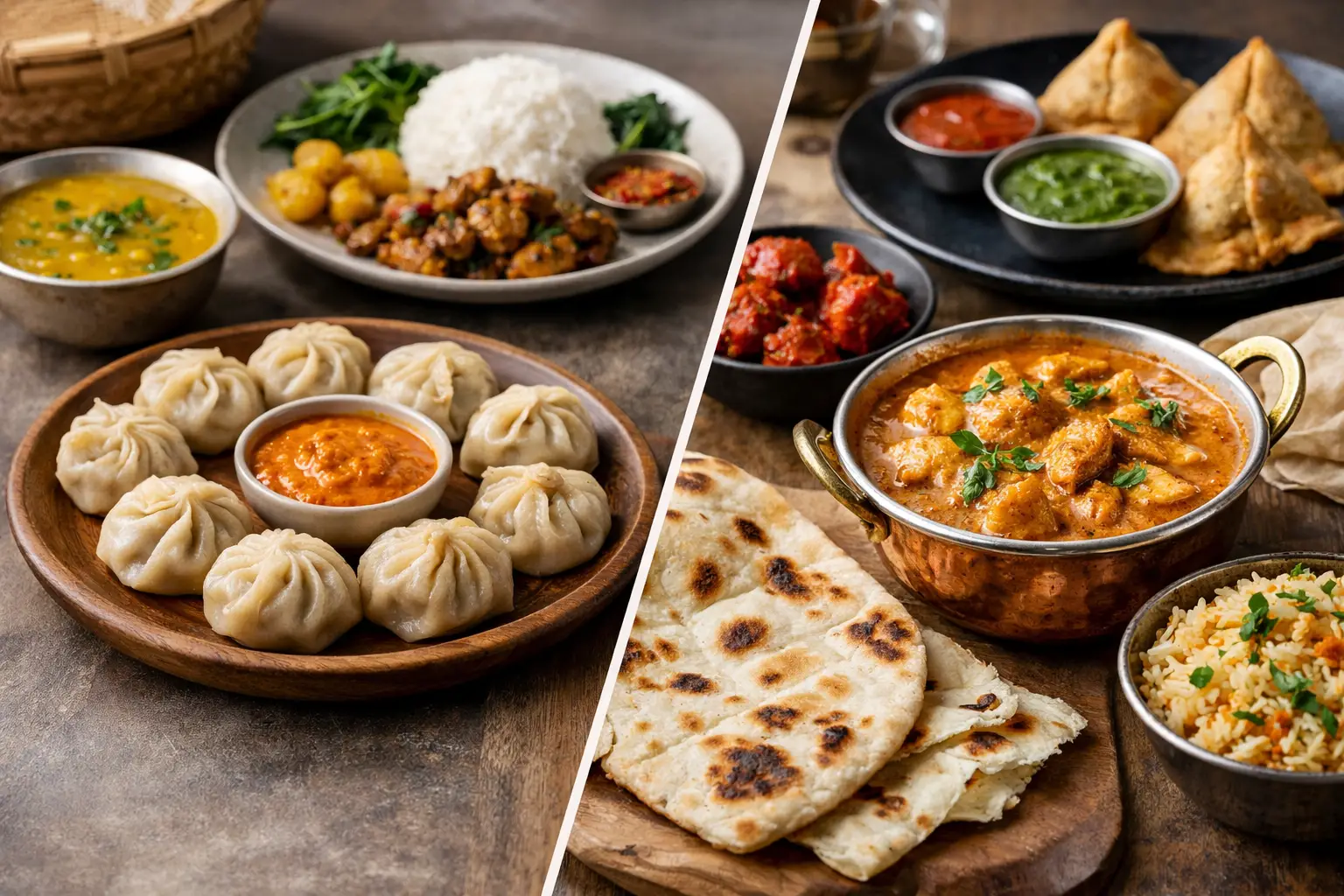

Choosing between momos and samosas, a rich curry and a comforting noodle bowl, or smoky grilled meat and a creamy tikka can feel tough when both cuisines smell incredible. That is exactly why the question of Nepalese vs Indian cuisine comes up so often at the table. They share geography, ingredients, and generations of culinary influence, but they do not taste the same, and understanding the difference makes the meal more enjoyable.
For many diners, Indian food is more familiar. You may already know butter chicken, naan, biryani, or saag paneer. Nepalese food often feels like a new discovery, especially if you have not spent time with Himalayan cooking before. The good news is that Nepalese cuisine is welcoming, balanced, and easy to love, especially for guests who want bold flavor without every dish leaning heavy or overly rich.
Nepalese vs Indian cuisine at a glance
The simplest way to understand Nepalese vs Indian cuisine is this: Indian cuisine often builds its identity around layered spice, regional curry traditions, breads, and a wide range of vegetarian and meat dishes, while Nepalese cuisine tends to feel lighter, more mountain-inspired, and more centered on broths, dumplings, rice sets, pickles, and grilled meats.
That does not mean one is mild and the other is hot. Both cuisines can be deeply spiced, aromatic, and satisfying. The difference is usually in how the flavor is presented. Indian dishes often develop richness through sauce, cream, ghee, tomato, onion, and spice blends. Nepalese dishes more often let clear, direct flavors come forward, with ginger, garlic, sesame, timur pepper, fresh herbs, broth, and fermented or pickled elements creating contrast.
If you are a diner who likes variety at the table, this is where things get exciting. Indian cuisine can feel expansive and festive, with gravies, breads, tandoori dishes, lentils, and rice all working together. Nepalese cuisine can feel comforting and vivid at the same time, offering a cleaner finish that many guests find especially satisfying when they want a flavorful meal that still feels balanced.
What makes Nepalese food distinct
Nepalese cuisine sits at a cultural crossroads, shaped by the Himalayas, neighboring India, Tibet, and its own rich ethnic food traditions. That mix gives it a character that is hard to confuse once you have tasted it. You will often notice more soups, more dumplings, more preserved condiments, and a practical mountain style of cooking that values depth without unnecessary heaviness.
Momos are the dish many guests meet first. These filled dumplings can be steamed, fried, or served in a spicy sauce, and they show a side of Nepalese food that feels playful, comforting, and deeply craveable. Then there are dishes like thukpa, a noodle soup with real warmth and body, and dal bhat, the everyday meal built around lentils, rice, vegetables, pickles, and sides that create a complete plate.
Newari food adds another layer. Known for bold seasoning, grilled meats, beaten rice, and strong use of spice and texture, it brings a celebratory energy to Nepalese dining. It can be more intense, more savory, and more adventurous than what first-time diners expect. For guests who think Nepalese food will be gentle or plain, Newari dishes quickly change that assumption.
How Indian cuisine builds flavor
Indian cuisine is incredibly broad, so any single description has limits. North Indian dishes familiar to many US travelers and Caribbean diners often feature creamy curries, tandoor cooking, paneer, lentils, and breads like naan and roti. In other regions, coconut, mustard seed, tamarind, curry leaves, seafood, and rice become more dominant. So when people say Indian food, they are really talking about many cuisines under one name.
Still, there are some common patterns diners recognize. Indian cooking often emphasizes complex masalas, slow-cooked sauces, and layered spice that builds from the first bite to the last. A chicken curry, lamb vindaloo, chana masala, or korma may all use very different seasoning profiles, but they often share a sense of depth that comes from carefully developed bases.
That is one reason Indian cuisine feels so satisfying for family meals and group dining. There is usually something for everyone, from mild and creamy dishes to fiery, tangy, or smoky plates. It also pairs naturally with breads and rice, giving diners many ways to shape each bite.
Nepalese vs Indian cuisine in spices, heat, and texture
When guests ask which cuisine is spicier, the honest answer is that it depends on the dish and the kitchen. Indian food has a reputation for heat, but many classic Indian dishes are more aromatic than hot. Nepalese food can also surprise you, especially when chili, achar, or regional peppercorns are involved.
The bigger difference is texture and finish. Indian curries often coat the palate with creaminess, tomato richness, or buttery spice. Nepalese dishes more often feel sharper, fresher, or brothier, especially when served with pickles, fermented condiments, or grilled meats. One cuisine is not better than the other. They simply satisfy different cravings.
If you want a meal that feels indulgent and layered, Indian cuisine often wins that moment. If you want something savory, soulful, and a little lighter on the finish, Nepalese food can be the better choice. Many diners enjoy both for exactly that reason.
Signature dishes that show the difference
A few dishes make the contrast easy to taste. On the Nepalese side, momos are a must. They are comforting, shareable, and full of character, especially with chutney or spicy sauce. Thukpa offers warmth and depth in a noodle soup format that feels especially inviting if you want something hearty without going heavy. Sekuwa, a seasoned grilled meat dish, brings smoke and spice in a more direct, less saucy style.
On the Indian side, butter chicken, tikka masala, biryani, tandoori chicken, and saag dishes are popular because they show how Indian cuisine balances richness, spice, and aroma. A biryani delivers fragrance and structure. A curry delivers sauce and warmth. Tandoori dishes bring char and yogurt-marinated depth.
There is some overlap, of course. Both cuisines use rice, lentils, meat, vegetables, and spice. Both have comfort food and celebration food. But the final experience on the plate is usually quite different.
Which cuisine is better for first-time diners?
For first-time diners, the better question is not which cuisine is better, but what kind of meal you want tonight. If you are craving familiar favorites, Indian cuisine may feel like the easier entry point. Many guests already know the names of the dishes, and that confidence helps when ordering for a group.
If you want to try something new without stepping too far from comfort, Nepalese cuisine is an excellent choice. Dumplings, grilled meats, rice plates, and noodles are approachable formats, even when the flavors are new. That is part of what makes it such a rewarding dining experience. It feels distinctive without feeling distant.
For families, couples, and mixed groups, a menu that offers both cuisines can be ideal. One guest can order a creamy curry, another can go for momos or chow mein, and everyone still shares a meal that feels connected. At Newa Chopstix, that balance is part of the experience – authentic Himalayan and Indian flavors, welcoming service, and dishes that can match different spice preferences and comfort levels.
Nepalese vs Indian cuisine for your next meal
If your idea of a great night out includes variety, warmth, and food that tastes like it was cooked with care, you do not have to choose based on labels alone. Nepalese vs Indian cuisine is not a contest with one winner. It is a chance to understand two proud food traditions that meet in some places and stand beautifully apart in others.
One may call for a rich curry and fresh naan. Another may call for steamed momos, grilled meat, or a soul-soothing bowl of soup. The best choice is the one that fits your appetite, your table, and the kind of experience you want to have. If you stay curious, both cuisines will reward you, and your next favorite dish might be the one you did not expect to order.