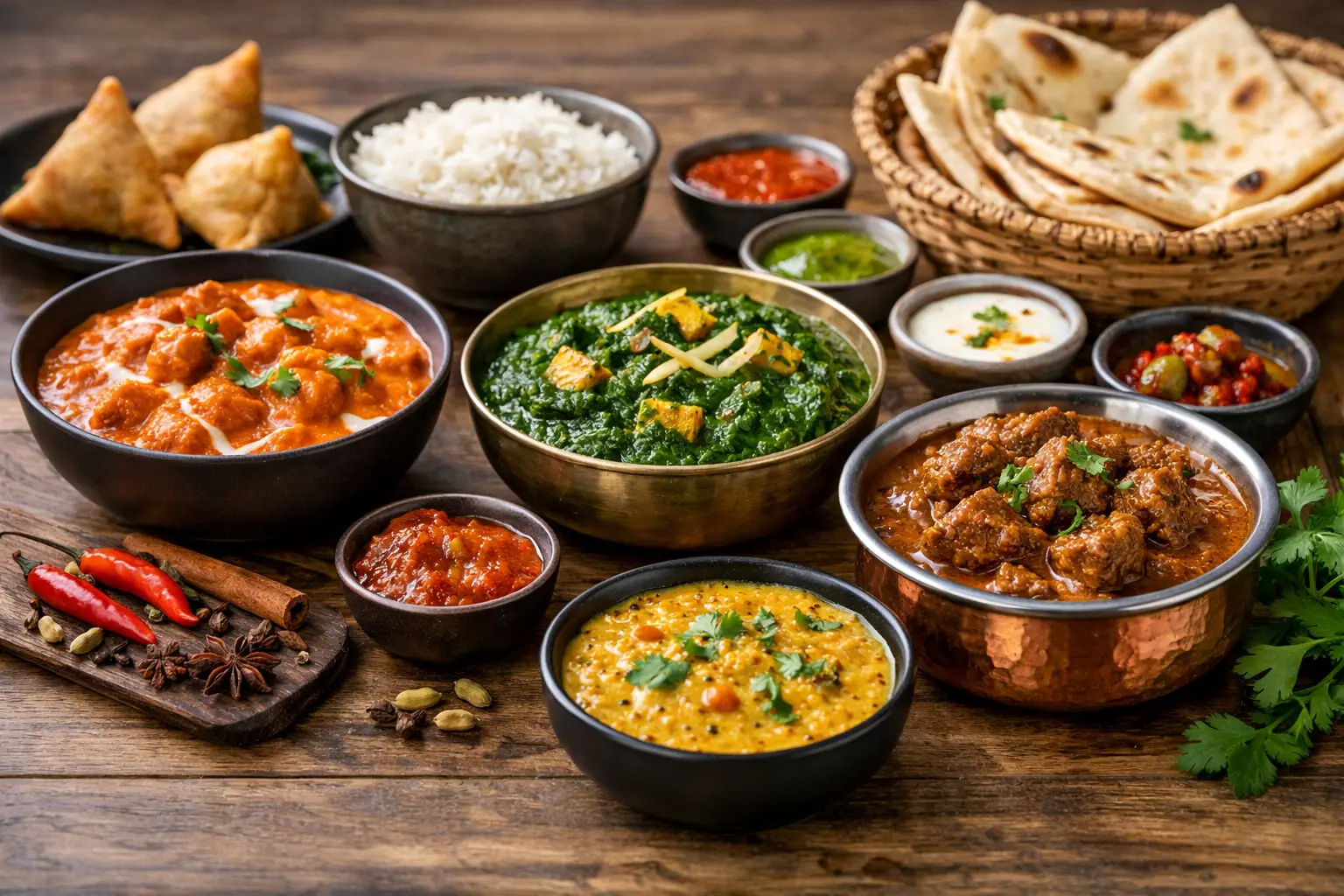

Choosing a curry should feel exciting, not overwhelming. If you have ever looked at a menu full of masala, korma, vindaloo, jalfrezi, and saag and wondered where to start, this guide to Indian curries will help you order with confidence and enjoy every bite.
Indian curries are not one single style of dish. They are a broad family of recipes built around different regions, spice blends, cooking methods, and textures. Some are rich and creamy. Others are bright, tomato-forward, smoky, buttery, or deeply spiced with herbs and aromatics. That range is exactly what makes curry such a rewarding part of the dining experience.
What makes Indian curries so varied
The word curry is often used as a shortcut, but the food itself is far more detailed than that. A curry can be built on onion and tomato, yogurt, cream, coconut, ground nuts, or leafy greens. The sauce may be silky and mild or bold and fiery. Even two dishes with similar ingredients can taste completely different depending on how the spices are layered and cooked.
That is why a good curry is not just about heat. It is about balance. Cumin can add warmth. Coriander can bring a citrusy note. Turmeric gives earthiness and color. Garam masala adds depth. Ginger, garlic, green chilies, fenugreek, mustard seeds, and cardamom can each shift the character of a dish in a distinct way.
For diners who are newer to Indian food, it helps to think of curries in terms of flavor profile rather than just spice level. Creamy, tangy, smoky, savory, and herb-forward are better guides than simply asking what is hottest.
A practical guide to Indian curries by style
If you want an easy way to understand the menu, start with the most common curry styles and what they usually offer.
Korma
Korma is often the best starting point for guests who prefer gentle spice and a smooth, comforting sauce. It is usually made with cream, yogurt, nuts, or a combination of those ingredients, which gives it a mellow texture and slightly sweet finish. Chicken korma is a popular choice, but lamb and vegetable versions can be just as satisfying.
The trade-off is that korma is less sharp and less fiery than other curries. If you want bold chili heat, this may not be the one. If you want something rich and approachable, it is a reliable favorite.
Tikka Masala
Tikka masala is one of the most widely recognized curry dishes for good reason. It tends to have a tomato-based sauce with cream and warming spices, creating a flavor that is rich but still lively. The protein, often chicken, is usually cooked first and then finished in the sauce, which gives the dish extra depth.
This is a strong choice for diners who want something familiar, full-flavored, and not too aggressive. It sits comfortably in the middle – more vibrant than korma, usually less intense than vindaloo.
Butter Curry or Butter Chicken
Butter-based curries are known for their velvety texture and rounded flavor. The sauce often includes tomato, butter, cream, and aromatic spices, resulting in a dish that feels luxurious without being heavy in spice. It is a favorite for families and for anyone easing into Indian cuisine.
Because it is so smooth, butter curry may feel less complex than drier or more chili-forward dishes. Still, when made well, it is deeply comforting and full of character.
Vindaloo
Vindaloo has a reputation for heat, and that reputation is usually earned. It commonly features chilies, vinegar, garlic, and bold spices, creating a curry that is tangy, intense, and unmistakably assertive. If you enjoy dishes with a real kick, vindaloo can be exciting and memorable.
That said, heat should not overpower the dish completely. A well-made vindaloo still has balance. If you love spice but also want to taste the layers underneath, ask for a level that suits you rather than chasing the hottest option on the menu.
Jalfrezi
Jalfrezi is often a great pick for diners who want a curry with texture. It usually includes peppers, onions, tomatoes, and green chilies cooked quickly with meat or vegetables, so the result is lively and slightly drier than creamier curries. The flavor is savory, fresh, and direct.
Compared with korma or butter curry, jalfrezi feels brighter and less rich. It is a good choice when you want spice and boldness without a heavy sauce.
Saag
Saag refers to a curry made with leafy greens, often spinach, combined with garlic, ginger, and warming spices. Saag dishes can be made with paneer, chicken, lamb, or other proteins. The flavor is earthy, savory, and deeply satisfying.
For guests who want something a little different from tomato- or cream-based curries, saag is worth trying. It is not always the first dish people order, but it is often one of the most comforting.
Madras
Madras curry is usually known for a stronger spice profile and a deeper red sauce. It can be hot, but it is also prized for its full-bodied flavor, often built from tomato, chili, and a well-rounded spice base. If you want a curry that feels bold without going straight to vindaloo territory, madras is often a smart middle ground.
How to choose the right curry for your taste
A good guide to Indian curries should make ordering simpler, especially if you are dining with different preferences at the same table. The easiest place to begin is with three questions: How spicy do you want it, how rich do you want it, and what protein or vegetable do you enjoy most?
If you prefer mild and creamy, start with korma or butter curry. If you want a balanced classic, tikka masala is usually a safe and satisfying choice. If you enjoy heat and sharper flavors, look toward jalfrezi, madras, or vindaloo. If you want something earthy and comforting, saag deserves attention.
Protein matters too. Chicken tends to carry sauces in a familiar and approachable way. Lamb often brings a richer flavor that pairs well with stronger curries. Shrimp cooks quickly and works beautifully in lighter or tangier sauces. Paneer, a fresh Indian cheese, offers a soft, satisfying option for vegetarians. Mixed vegetable curries can be excellent, though their final character depends heavily on the sauce.
Spice level is only part of the story
Many diners assume Indian curry is always very hot. In reality, a great curry can be mild, medium, or spicy and still feel complete. Heat should support flavor, not replace it.
This is especially helpful for families and groups. One person may want something creamy and gentle, while another wants a dish with serious warmth. A thoughtful restaurant understands that preference and can guide guests toward curries that fit their comfort level without sacrificing authenticity. That flexibility makes Indian dining more welcoming, especially for first-time guests.
What to pair with curry
The right pairing can change your whole meal. Basmati rice gives the sauce room to shine and helps absorb richer gravies. Naan adds texture and is perfect for scooping up creamy or buttery curries. If you order a hotter dish, a cooling side can bring balance.
When sharing with a table, variety works best. A creamy curry beside a spicier one creates contrast. Add rice, bread, and a starter or two, and the meal becomes more rounded and satisfying. This is one reason Indian food is such a strong choice for couples, families, and groups – everyone can find something they enjoy.
Why a well-made curry stands out
Not every curry delivers the same experience. The difference often comes down to technique, freshness, and patience. Spices need to be cooked properly to release aroma and depth. Sauces should have structure, not just thickness. Proteins should stay tender. Vegetables should hold their texture.
That is where chef experience truly matters. At Newa Chopstix, our approach is rooted in authentic flavor, careful preparation, and warm hospitality, so guests can enjoy Indian curries that feel both traditional and approachable in a setting that feels like home.
A guide to Indian curries for first-time diners
If this is your first time ordering, keep it simple. Choose one familiar dish and one that feels a little adventurous. A butter chicken or tikka masala paired with a saag or jalfrezi gives you contrast without making the meal feel risky.
You do not need to know every regional detail to enjoy Indian food well. You just need a sense of what you like – creamy or bold, mild or spicy, chicken or vegetarian. From there, the menu starts to feel far more inviting.
The best curry is not the hottest one or the most famous one. It is the one that matches your taste, your mood, and the kind of meal you want to remember.