
You can spot the difference between Indo Chinese vs Chinese from the first bite. One leans into layered heat, bold sauces, and a lively mix of garlic, chilies, soy, and vinegar. The other is usually more restrained, built around balance, texture, and the natural flavor of the main ingredient. Both are delicious, but they are not the same cuisine – and knowing the difference helps you order with confidence.
For many diners, especially when scanning a menu in a new place, the names can sound close enough to blur together. Fried rice is fried rice, right? Noodles are noodles. But once the plate arrives, the contrast becomes clear. Indo Chinese food has its own identity, history, and loyal following, and it deserves to be understood on its own terms rather than treated as simply “Chinese food with extra spice.”
Indo Chinese vs Chinese: The core difference
The simplest way to understand Indo Chinese vs Chinese is this: Chinese cuisine comes from regional food traditions in China, while Indo Chinese cuisine was developed by Chinese communities in India and shaped by Indian tastes. That means Indo Chinese food is a true fusion cuisine, not an imitation and not a watered-down version of either side.
Chinese cooking is deeply regional. Cantonese dishes often highlight freshness and gentle seasoning. Sichuan food may bring heat and numbing spice, but even then, the flavors are carefully structured. Northern styles may feature wheat noodles and dumplings, while other regions focus more on seafood, broths, or delicate stir-fries. There is tremendous variety, but the general goal is harmony.
Indo Chinese cuisine takes some familiar Chinese techniques – stir-frying, wok cooking, noodles, fried rice, sauces – and reworks them through an Indian lens. Green chilies, red chili sauce, ginger, garlic, vinegar, cornstarch-thickened gravies, and more assertive seasoning play a larger role. The result is louder, punchier, and often more immediately craveable for diners who enjoy bold flavor.
Where Indo Chinese cuisine came from
This style of cooking is closely tied to the Chinese community that settled in Kolkata, formerly Calcutta. Over time, Chinese-origin cooks adapted dishes to local ingredients and Indian preferences. That meant more heat, stronger seasoning, and a wider use of ingredients that Indian diners already loved.
This origin matters because it explains why Indo Chinese food feels so complete and recognizable. It is not a trend. It has history behind it. Dishes like chili chicken, Hakka noodles, gobi Manchurian, and Schezwan fried rice became favorites because they met people exactly where they were – familiar enough to enjoy right away, different enough to feel exciting.
In many parts of India, Indo Chinese is now part of everyday eating. It shows up in street food stalls, family restaurants, quick lunches, and celebratory meals. That broad popularity gave the cuisine its own rhythm and confidence.
Flavor: balance vs boldness
If you are deciding what to order, flavor is where the biggest difference shows up.
Chinese dishes often aim for precision. Salt, sweetness, umami, aromatics, and texture are all handled with care so that no one element overwhelms the plate. Even richer dishes tend to feel composed. A stir-fry may taste clean and savory rather than intensely spicy or tangy.
Indo Chinese food usually goes bigger. You taste the chilies sooner. Garlic is often more forward. Vinegar can add a sharp edge. Sauces may be thicker and more dramatic, coating noodles, vegetables, or proteins in a way that feels instantly satisfying. That does not make one style better than the other. It simply means they answer different cravings.
When guests ask what to expect, a helpful answer is this: Chinese cuisine often rewards attention to nuance, while Indo Chinese delivers immediate impact. On some days you want subtlety. On others, you want chili paneer or chicken lollipop with a sizzling, saucy finish.
Ingredients and sauces are not used the same way
There is overlap between the two styles. Soy sauce, garlic, ginger, scallions, noodles, and rice can all appear in both. The difference is how they are combined and how strongly they are pushed forward.
In many Chinese dishes, sauces support the ingredient rather than dominate it. The texture of a vegetable, the sweetness of shrimp, or the tenderness of chicken may stay at the center. Seasoning is purposeful, but often controlled.
In Indo Chinese cooking, sauces become part of the attraction. Red chili sauce, green chilies, vinegar, soy sauce, tomato ketchup in some preparations, chili-garlic blends, and thick gravies create a more intense profile. This is why dishes such as Manchurian or Schezwan-style noodles feel so distinct. They are built to be bold and memorable.
That said, there is plenty of range within Indo Chinese too. Some dishes are dry and stir-fried, others are served with gravy, and spice levels can vary. For diners who enjoy flexibility, that is part of the appeal.
Cooking style and texture
Chinese cuisine often emphasizes technique in a way that shows up through texture. A vegetable may be crisp-tender. A dumpling wrapper may be delicate but structured. A fish dish may be steamed to preserve softness and freshness. There is a strong sense that texture is not accidental.
Indo Chinese also values texture, but often with more contrast and drama. Crispy coatings, glossy sauces, wok-tossed noodles, and fried starters are common. A dish like gobi Manchurian works because the cauliflower holds crunch under sauce. Chili chicken often balances crisp edges with a sticky, spicy glaze.
This makes Indo Chinese especially popular with diners who want comfort food with energy. It is familiar in the best way – hot, savory, saucy, and satisfying.
Common dishes that show the difference
A few examples make the comparison easier.
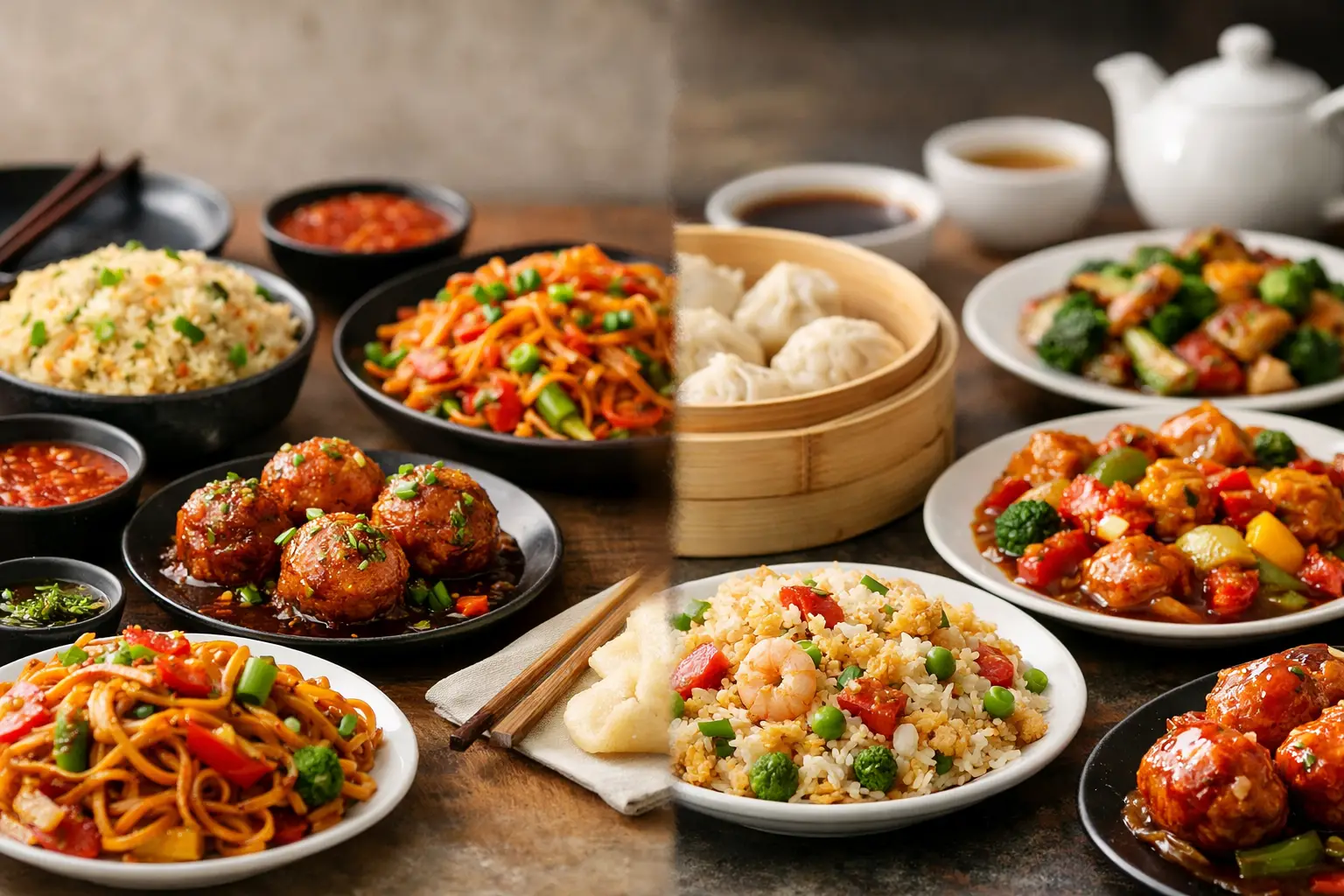
Fried rice in a Chinese style may be lighter, with clearly separated grains, measured seasoning, egg, scallions, and selected proteins or vegetables. Indo Chinese fried rice often brings more chili, more sauce, and a stronger hit of garlic and aromatics.
Noodles tell a similar story. Chinese noodle dishes can range from delicate to rich depending on the region, but many stay focused on broth, chew, and ingredient balance. Hakka noodles in the Indo Chinese tradition are usually stir-fried over high heat with vegetables, soy, chilies, and a stronger savory finish.
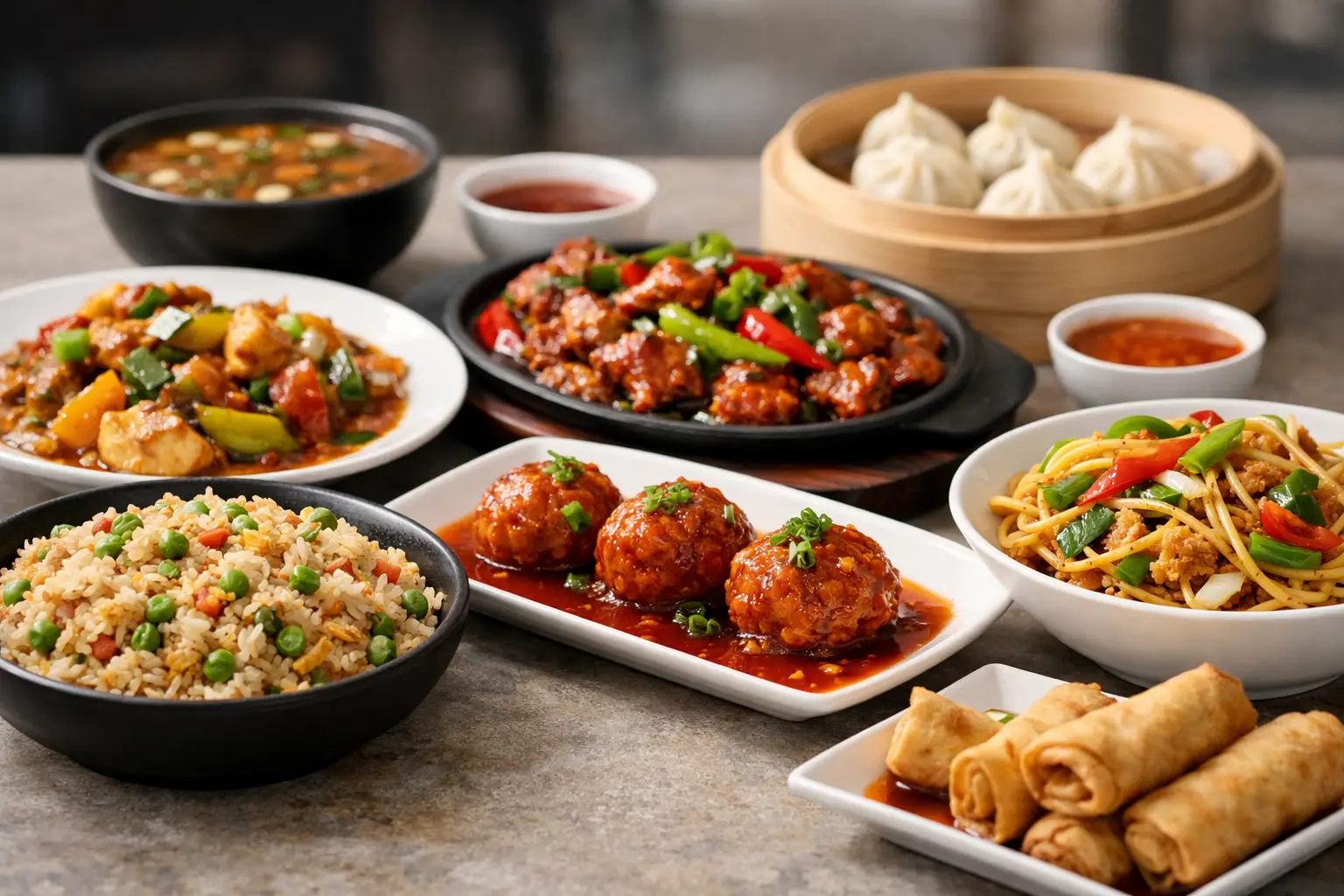
Then there are dishes that are unmistakably Indo Chinese, not standard Chinese fare – chili paneer, gobi Manchurian, chicken Manchurian, and Schezwan noodles. These dishes reflect the fusion identity clearly. They are loved because they combine wok technique with Indian-style flavor preferences.
Which one is spicier?
Most of the time, Indo Chinese is spicier. Not every dish is fiery, and Chinese cuisine certainly includes spicy regional styles, especially Sichuan and Hunan influences. But as a general rule, Indo Chinese tends to present heat more directly.
That matters for families and mixed groups. Some diners want the excitement of chilies and tangy sauces. Others prefer a gentler plate. The good news is that Indo Chinese is often very adaptable, especially in restaurants that cook to order. If you like flavor but not too much heat, you can usually ask for a milder preparation.
Why diners often love both
This is not really a debate with one winner. It is more about matching the meal to the moment.
If you are craving elegance, regional tradition, delicate broths, dumplings, or stir-fries that let ingredients speak, Chinese cuisine can be deeply rewarding. If you want a lively, crowd-pleasing plate that brings spice, texture, and sauce-driven comfort, Indo Chinese is hard to beat.
That is one reason Indo Chinese works so well in a warm, social dining setting. It is shareable, colorful, and easy to love across a table. Dishes arrive with personality. They invite conversation. For guests who want something beyond standard takeout expectations, they offer a more adventurous but still approachable experience.
At Newa Chopstix, that appeal feels right at home because guests are often looking for authentic flavor with flexibility. Some want rich and spicy, some want family-friendly, and some want to try something they have never ordered before without feeling out of their depth.
Indo Chinese vs Chinese: Which should you order?
It depends on what kind of meal you want.
If you prefer cleaner flavors, subtle seasoning, and dishes centered on traditional regional methods, Chinese may be the better fit. If you are in the mood for bold noodles, spicy fried rice, crispy appetizers, and a sauce-forward finish, Indo Chinese will likely satisfy you faster.
There is also the question of company. Indo Chinese tends to shine in group dining because it is expressive and easy to share. Chinese cuisine can be just as communal, but some of its most beautiful dishes ask for a slower kind of attention. Neither approach is wrong. They simply create different experiences at the table.
The best part is that understanding the difference makes the menu more enjoyable, not more complicated. You stop ordering by guesswork. You start choosing based on flavor, texture, and mood.
The next time you see both on a menu, trust your appetite. If you want balance, go Chinese. If you want bold, go Indo Chinese – and if you are dining with people who love to share, order a little of both and let the table tell you what it was craving all along.