
If you have ever scanned a Himalayan menu and paused at momos, you are not alone. What are momo dumplings, exactly? They are one of the most loved foods across Nepal and the Himalayan region – tender filled dumplings served hot, flavorful, and often with a bold dipping sauce that turns a simple bite into something deeply satisfying.
For many first-time guests, momos are the dish that opens the door to Nepalese food. They feel familiar enough to order with confidence, but distinct enough to be memorable. That balance is part of their charm. At a good restaurant, momos arrive steaming, neatly folded, and packed with flavor that feels comforting from the first bite.
What are momo dumplings?
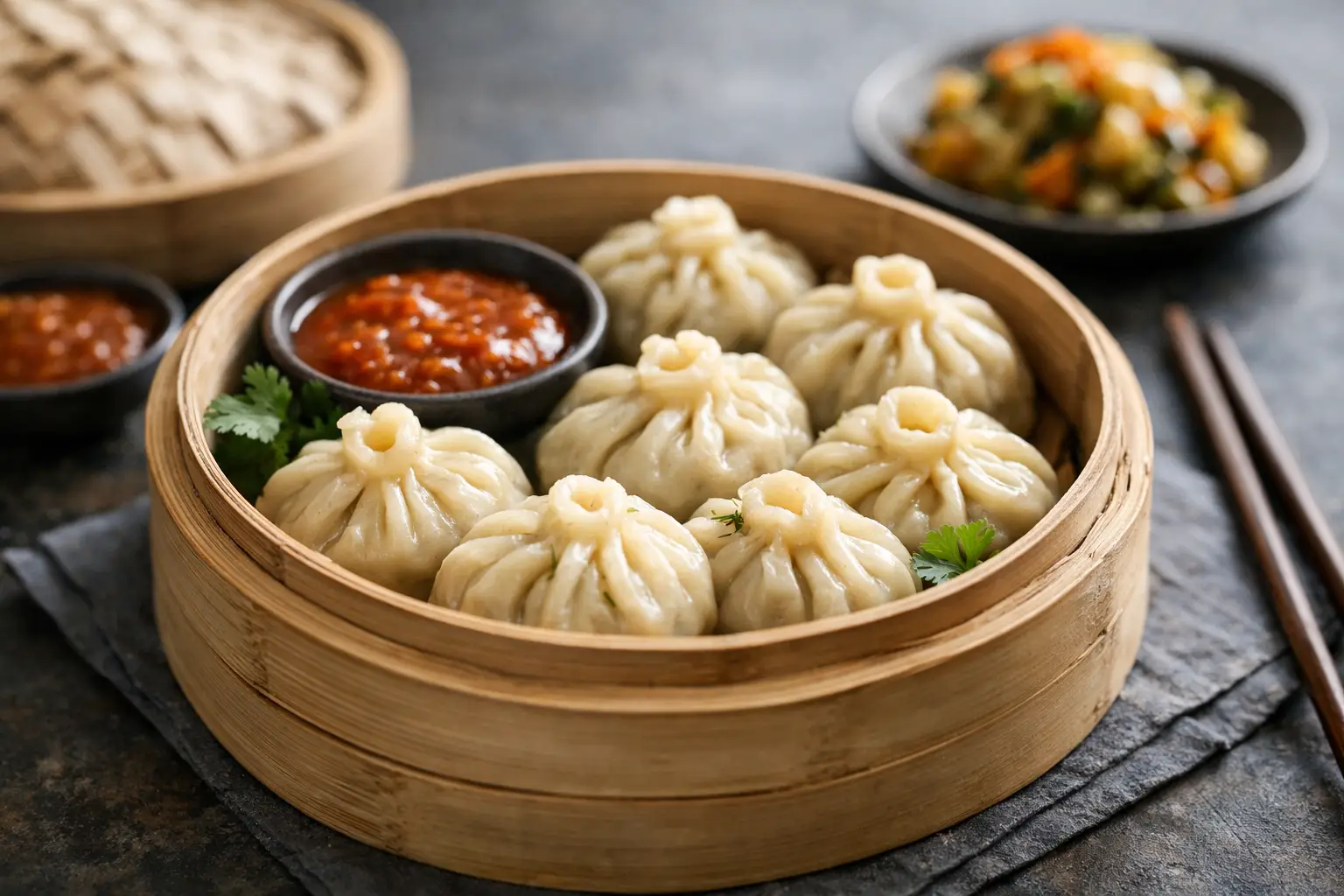
Momo dumplings are Himalayan-style dumplings typically filled with seasoned meat or vegetables, wrapped in a soft dough, and most often steamed. They are especially popular in Nepal, Tibet, and nearby regions, and they have become a signature dish for diners looking to experience authentic Himalayan flavor.
The wrapper is usually made from a simple flour dough. Inside, the filling can vary, but common options include chicken, pork, buff, vegetables, or paneer depending on the region, household, or restaurant. What makes momos stand out is not only the filling itself, but the seasoning. Ginger, garlic, onion, herbs, and carefully balanced spices create a savory bite that is lighter than many fried appetizers but still full of character.
Momos are often compared to Chinese dumplings, potstickers, or Japanese gyoza, and that comparison helps, but only to a point. The technique may feel familiar, yet the flavor profile is clearly Himalayan. The dipping sauce also changes the experience. A fresh, spicy tomato-based achar or chutney is often served on the side, adding heat, tang, and depth.
Where do momo dumplings come from?
Momos have deep roots in the Himalayan region. They are strongly associated with Nepalese and Tibetan cuisine, though versions are enjoyed across parts of India, Bhutan, and beyond. As with many traditional foods, their story is shaped by movement, trade, and local adaptation.
In Nepal, momos became part of everyday food culture and are now one of the country’s most popular dishes. They are served in homes, at roadside eateries, and in restaurants ranging from casual to refined. For many people, they are comfort food. For others, they are the dish you order when you want something warm, flavorful, and easy to share.
That background matters because momos are not a passing trend or a novelty item. They carry a sense of place. When made with care, they offer a real taste of Himalayan hospitality – simple in concept, generous in spirit, and rich in flavor.
What do momo dumplings taste like?
The short answer is this: savory, juicy, and satisfying.
The wrapper is soft and tender when steamed, with just enough chew to hold the filling together. The inside is where much of the personality lives. A well-made chicken momo, for example, tastes aromatic and juicy, with ginger, garlic, and onion bringing warmth and depth rather than overwhelming spice. Vegetable momos tend to be lighter and slightly sweeter, especially when cabbage, carrots, or onions are part of the mix.
Then comes the sauce. This is where a plate of momos can shift from comforting to exciting. A tomato-based achar may add heat, brightness, and a little smokiness. Some versions are mild and balanced. Others bring real fire. That is one reason momos appeal to a wide range of diners – you can enjoy the dumpling itself as something gentle and approachable, then adjust the intensity with the sauce.
For families and mixed groups, that flexibility matters. Someone who prefers mild flavors can enjoy the dumplings on their own, while a spice lover can reach for extra chutney. It is a dish that welcomes both kinds of diners to the same table.
How momo dumplings are made
The process is simple in theory and skillful in practice. Dough is mixed, rolled into small rounds, and filled with a seasoned mixture. Each dumpling is then folded and sealed by hand. That hand-formed shape is part of what makes momos feel special. No two plates look exactly the same when they are made traditionally, and that is part of their home-style appeal.
Steaming is the most common cooking method because it keeps the filling moist and lets the seasoning shine. Some kitchens also offer fried or pan-fried versions for guests who want a crisp exterior. Steamed momos are usually the best place to start if you want the most classic experience.
Good momos depend on balance. If the wrapper is too thick, the dumpling feels heavy. If the filling is too dry, the bite falls flat. If the sauce overwhelms everything else, you lose the subtlety that makes the dish so inviting. When all three elements are right – wrapper, filling, and sauce – momos are hard to forget.
Are momos the same as dumplings from other cuisines?
Not exactly, though there are similarities.
Most cultures with a dumpling tradition have their own version of dough wrapped around a filling. That is part of what makes momos so easy for new diners to understand. If you already enjoy dumplings, ravioli, empanadas, or similar filled foods, momos will not feel intimidating.
Still, momos have their own identity. The folding style can be different. The fillings are seasoned in a distinctly Himalayan way. The sauces served alongside them also set them apart. So while it is fair to describe them as dumplings, it is better not to reduce them to “just another dumpling.” Their personality comes from the cuisine and culture behind them.
That difference matters when choosing where to try them. In a restaurant that respects the cuisine, momos are not treated like a generic appetizer. They are prepared as a signature dish with real attention to texture, flavor, and authenticity.
Why diners love momo dumplings
Part of the appeal is how approachable they are. Momos are easy to share, easy to eat, and easy to enjoy even if you are new to Nepalese food. They work as a starter, a snack, or in some cases a light meal. They also suit different occasions. A couple can order them to begin dinner, a family can share a plate at the table, and a curious traveler can try something authentic without feeling out of their comfort zone.
Another reason diners love momos is that they offer comfort without feeling ordinary. They are warm, freshly cooked, and deeply satisfying, but they also carry the excitement of trying something with real cultural roots. That is a strong combination, especially for visitors who want a meal that feels both welcoming and memorable.
For restaurants that specialize in Himalayan cuisine, momos often become a guest favorite because they show what the kitchen does well. A dumpling may look simple, but it reveals a lot. You can taste the care in the seasoning, the quality of the filling, and the confidence behind the recipe.
What to expect when ordering momos for the first time
If it is your first order, steamed momos are usually the right place to begin. They give you the clearest sense of the filling and the traditional style. Chicken and vegetable are often the easiest entry points because they are familiar, flavorful, and broadly appealing.
When your plate arrives, try one bite on its own before adding sauce. That helps you notice the texture of the wrapper and the seasoning inside. Then add a little chutney and see how the flavor changes. If the sauce is spicy, start small. You can always add more, but a little often goes a long way.
Momos pair well with a full meal, but they also hold their own. If you are dining with others, they make an excellent shared dish because everyone can try one and compare favorites. In a warm, welcoming dining room, that kind of sharing fits naturally with the spirit of the cuisine.
At Newa Chopstix, momos are part of the experience guests remember because they bring authentic Himalayan flavor to the table in a way that feels inviting from the very first bite.
What are momo dumplings really about?
They are about more than dough and filling. Momo dumplings represent comfort, tradition, and hospitality. They are the kind of dish that feels easy to love, yet still says something meaningful about where it comes from.
That is why they matter on a menu. They give first-time diners a welcoming place to start and give returning guests a reason to come back. If you are curious about Himalayan cuisine, momos are not just a safe first choice. They are one of the most delicious ways to taste the heart of it.
If you see them on the menu, order them warm, share them if you like, and save room for the sauce – that is often where the memory begins.