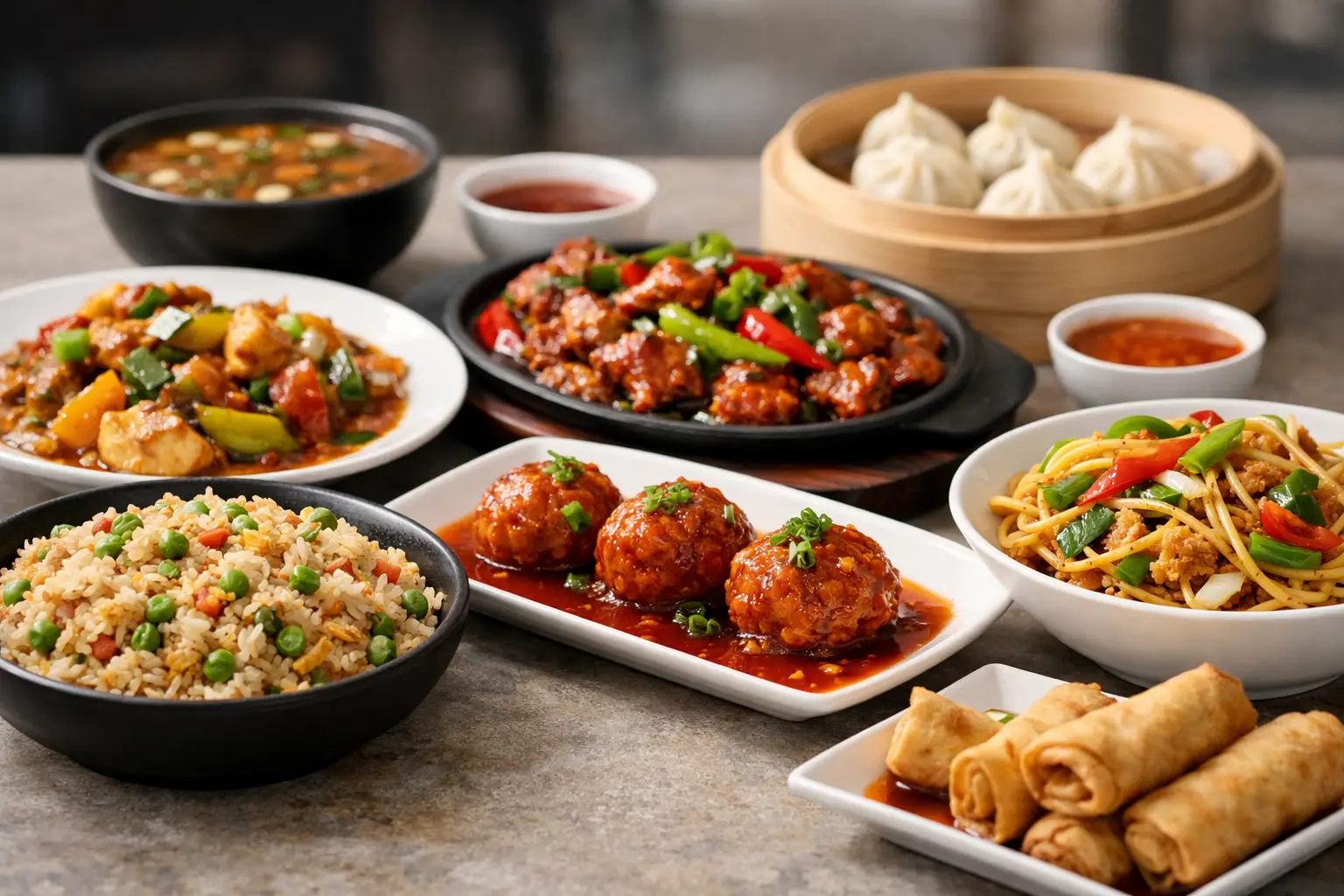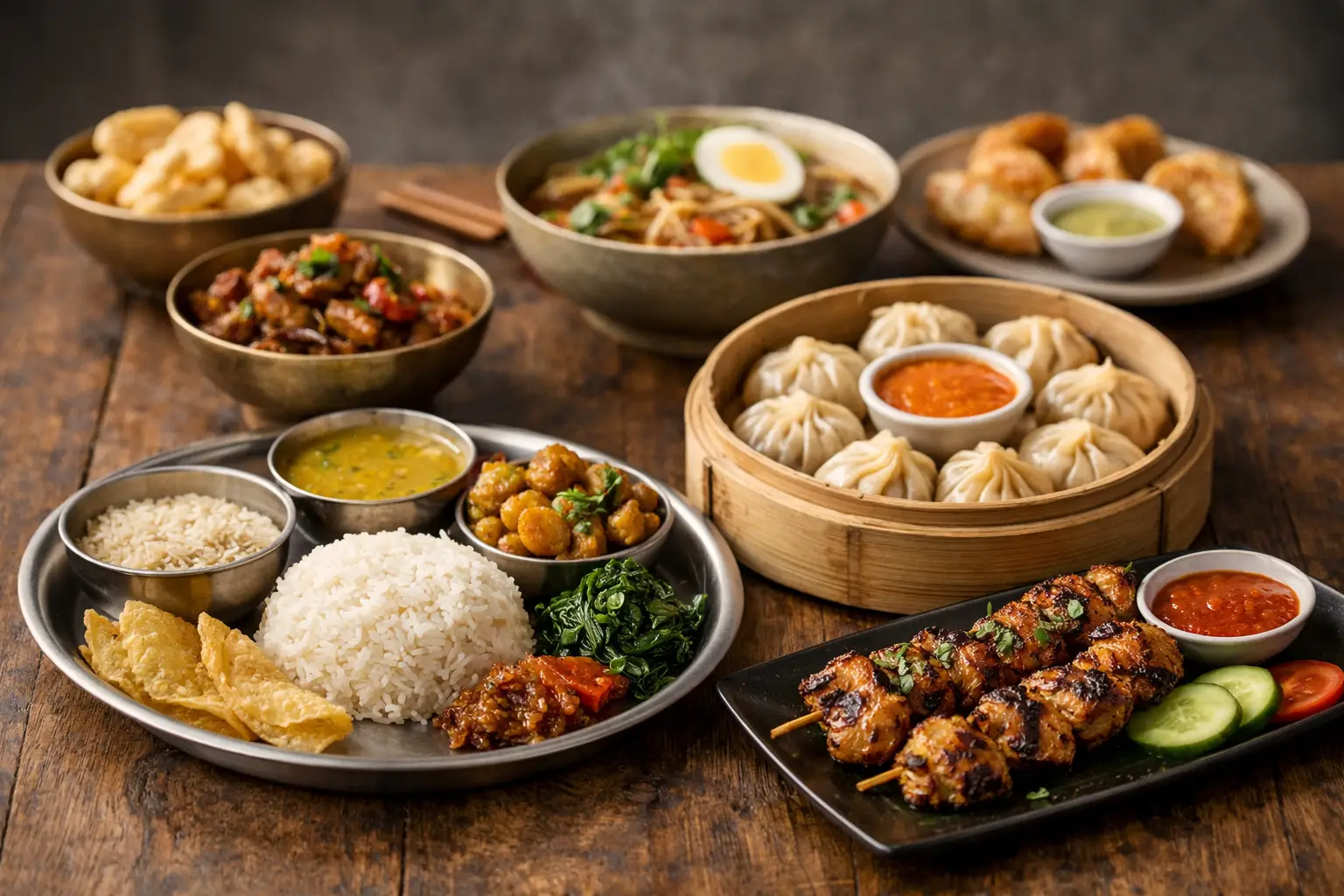

A plate of steaming momo, a fragrant bowl of thukpa, or a sizzling Newari starter can make a Nepalese menu feel wonderfully unfamiliar at first glance. This guide to Nepalese menu terms helps you recognize the dishes behind the names, understand how they may taste, and order a meal that feels right for your table.
Nepalese food is shaped by the Himalayas, the Kathmandu Valley, neighboring India, Tibet, and regional communities with their own proud cooking traditions. That is why one menu can include dumplings, curries, noodles, grilled meats, lentils, and bright pickles side by side. The variety is part of the experience.
A Guide to Nepalese Menu Terms: Begin With the Favorites
Momo
Momo are Nepalese dumplings and one of the best first orders for sharing. They are commonly filled with chicken, vegetables, pork, buffalo, or paneer, then steamed or fried. Think of them as a Himalayan cousin to dumplings found across Asia, but with their own seasoning and serving style.
Most momo arrive with achar, a boldly flavored dipping sauce. Achar can be tomato-based, sesame-rich, spicy, tangy, or all of the above. The sauce is not an afterthought. It gives each bite much of its character.
You may also see jhol momo. Jhol means a thin, savory, usually sesame-and-tomato broth or sauce served around the dumplings. It is a comforting choice for diners who enjoy plenty of sauce. Kothey momo are often pan-fried on one side and steamed through, offering a crisp base with a tender top. Chili momo are tossed with peppers, onions, and a lively sauce, making them a stronger, Indo-Chinese-style option.
Chow Mein
On a Nepalese menu, chow mein generally means stir-fried noodles with vegetables and your choice of protein. It has Chinese roots, but the Nepalese version is seasoned and prepared in a style familiar throughout the Himalayas. It can be mild and savory or noticeably spicy, depending on the kitchen and the level you request.
Chow mein is a comfortable choice for families and groups because it is filling, easy to share, and approachable for guests who are still getting acquainted with Nepalese flavors. Pair it with momo for a table that has both a snackable starter and a satisfying noodle dish.
Thukpa
Thukpa is a noodle soup with Tibetan and Himalayan roots. It usually combines noodles, vegetables, herbs, and a protein in a flavorful broth. It is warming, aromatic, and especially appealing when you want something lighter than a creamy curry but more substantial than a starter.
Broth-based dishes can vary greatly from one restaurant to another. Some are gently seasoned; others carry real heat from chilies and pepper. If you prefer a mild bowl, ask. A good restaurant will gladly help you choose a spice level that lets the flavors come through.
The Everyday Heart of Nepalese Cooking
Dal Bhat
Dal bhat refers to a classic Nepalese meal built around lentil soup and rice. The phrase is simple: dal means lentils, and bhat means rice. Yet the meal can be wonderfully complete, often served with a vegetable curry, meat curry, greens, achar, and other small accompaniments.
It is the kind of food that speaks to home cooking: nourishing, balanced, and deeply satisfying. If you are looking for a fuller traditional-style plate rather than one individual entrée, dal bhat is an excellent place to start.
Thakali Set
A thakali set is a generous meal associated with the Thakali community of Nepal. It often includes rice, dal, curry, seasonal vegetables, pickles, and a choice of meat or vegetarian items. Exact components differ by restaurant, but the intention remains the same: a complete, varied plate where each element complements the next.
This is a smart order for curious diners because it lets you taste several textures and flavors in one meal. The trade-off is portion size. A thakali set can be quite filling, so it may be better as a shared experience for lighter eaters or as a full meal for someone with an appetite.
Tarkari, Saag, and Achar
Tarkari simply means curry, often a vegetable curry, though it can also refer to a prepared dish more broadly. Saag is leafy greens cooked with aromatics and spices. Both are common accompaniments to rice and dal.
Achar, meanwhile, is a pickle or condiment. It may be made with tomato, radish, cucumber, sesame, chili, or seasonal vegetables. Its sharp, tangy flavor can cut through rich curries and grilled meats. Try a little first if you are sensitive to heat, then add more as you go.
Newari Terms Worth Knowing
Newari cuisine comes from the Newar community of the Kathmandu Valley and is known for bold seasoning, carefully prepared meats, fermented ingredients, and memorable shared dishes. It is a major part of Nepal’s culinary identity, with flavors that can feel quite different from the curries many American diners expect.
Choila
Choila is traditionally seasoned grilled or charred meat, often served with spices, herbs, and mustard oil. It can be chicken, buffalo, or another protein depending on the menu. The flavor is usually smoky, savory, and more assertive than a mild curry.
If you enjoy grilled food with chili, garlic, and a little edge, choila deserves your attention. It is especially good with rice, beaten rice, or a cold drink from the bar.
Bara
Bara are savory lentil patties, sometimes called lentil pancakes. They can be plain or topped with egg, meat, or vegetables. The texture varies from soft and hearty to lightly crisp at the edges, and they make a satisfying starter for vegetarian diners as well as meat eaters.
Chatamari
Chatamari is often described as a Nepalese rice crepe or rice-flour flatbread. It may be topped with minced meat, egg, vegetables, or other ingredients. While comparisons can help first-time diners, chatamari has a character of its own: earthy from rice flour, delicately crisp, and built for sharing.
Sekuwa and Sukuti
Sekuwa refers to marinated meat grilled over heat, giving it a smoky, charred finish. Sukuti is dried meat, often seasoned and used as a snack or side dish. Both speak to the love of preserved, grilled, and boldly seasoned foods found in many Nepalese regional traditions.
Curry, Masala, and Tandoori: Familiar Words With Different Meanings
Because Nepalese restaurants may also offer Indian and Indo-Chinese dishes, you will likely see terms that sound more familiar. Curry is a broad word for a sauce-based preparation, not one fixed recipe. A curry may be creamy, tomato-forward, onion-rich, mild, or hot.
Masala means a blend of spices. When a dish includes masala in its name, expect layered seasoning rather than one dominant spice. Tandoori indicates food cooked in a high-heat clay oven or prepared in that style, often with a smoky surface and tender interior. These dishes are frequently marinated in yogurt and spices before cooking.
Do not assume every curry is fiery, or that every red-colored dish is hot. Color can come from tomatoes, chilies, paprika, or spices. The best question is not just, “Is it spicy?” Ask whether the dish is naturally hot, and whether the kitchen can adjust it without losing its intended flavor.
How to Order With Confidence
Start by choosing one dish that feels familiar and one that feels new. For example, chow mein or a mild curry can sit comfortably beside steamed momo, choila, or chatamari. This approach works especially well for couples and groups with different comfort levels around spice.
When deciding between dishes, consider texture as much as flavor. Momo are soft and juicy. Sekuwa is grilled and smoky. Thukpa is brothy. Bara is hearty and lentil-forward. A thakali set offers several components at once. A balanced table feels more memorable when it includes contrast.
Vegetarian diners have plenty to explore, including vegetable momo, lentil dishes, saag, tarkari, paneer preparations, and vegetable chow mein. Still, preparation matters. Ask your server about broths, sauces, and cooking methods if you have dietary requirements. The same goes for gluten, dairy, and nut concerns.
At Newa Chopstix, guests can enjoy these Himalayan and Newari flavors alongside Indian and Indo-Chinese favorites in a welcoming setting. Whether you are dining with children, sharing small plates with friends, or trying Nepalese cuisine for the first time, choosing a spice level that suits your table keeps the meal comfortable and enjoyable.
The most rewarding order is not necessarily the most adventurous one. Choose a dish that makes you curious, share it with someone at the table, and let the achar, aromas, and conversation do the rest.