
If you have ever opened a Himalayan menu and paused at the curry section, you are not alone. A good guide to Nepalese curry dishes makes the experience easier, more exciting, and far more delicious because Nepalese curries are not one-note. They are layered, aromatic, comforting, and often gentler than diners expect, with depth that comes from careful cooking rather than heat alone.
Nepalese curry sits in a beautiful place between familiarity and surprise. If you already enjoy Indian curries, you will notice shared ingredients like cumin, coriander, turmeric, ginger, garlic, onion, and tomatoes. But Nepalese cooking often feels lighter on heavy cream, more focused on balanced spices, and deeply rooted in home-style comfort. Many dishes are built to let the main ingredient speak clearly, whether that is chicken, lamb, goat, vegetables, or lentils.
What makes Nepalese curry different
The first thing to know is that Nepalese curry is not one single style. Nepal is shaped by mountain communities, valleys, trade routes, and neighboring culinary influences, so the food changes by region and tradition. Some curries are rustic and earthy. Others are rich and festive. Some lean tomato-forward, while others build flavor through slow-cooked onions, warm spices, and broth.
A big difference is balance. In many Nepalese curry dishes, the spice profile is fragrant before it is fiery. You may taste fenugreek, cumin, coriander, garlic, ginger, black pepper, turmeric, and fresh herbs in a way that feels rounded and welcoming. That is one reason these dishes work so well for groups and families. They can be deeply flavorful without overwhelming diners who prefer mild or medium heat.
Texture matters too. Nepalese curries are often less sugary and less creamy than what some American diners expect from restaurant curry. That does not make them thin or plain. It means the sauces can feel cleaner, more savory, and more closely tied to the meat or vegetables in the pan.
A practical guide to Nepalese curry dishes on the menu
When you are deciding what to order, it helps to think in terms of protein, richness, and spice level instead of trying to decode every dish name at once. Some curries are great for first-timers because they are smooth, familiar, and comforting. Others are better if you want a more traditional, bolder experience.
Chicken curries
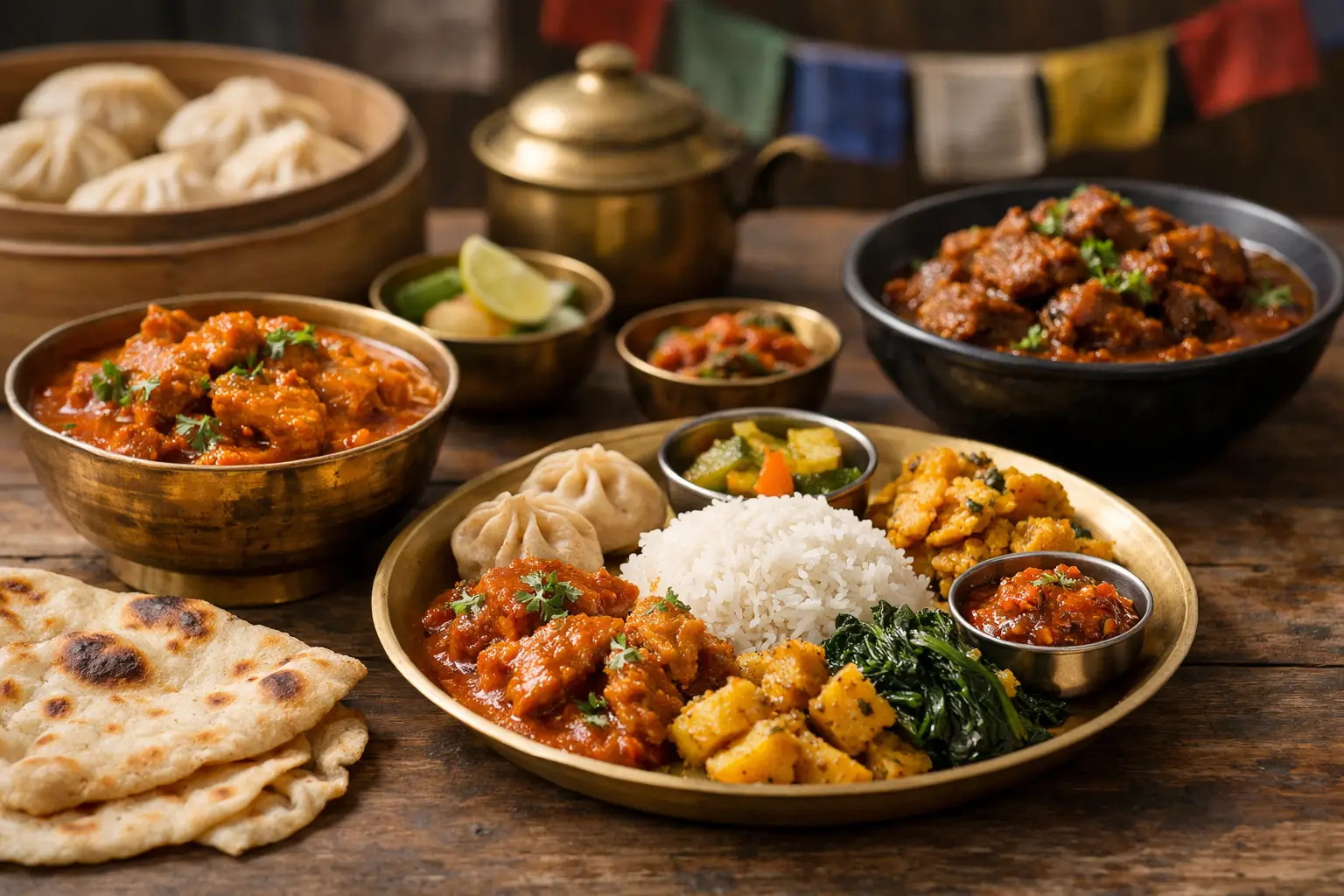
Chicken curry is often the easiest place to begin. In a Nepalese kitchen, chicken is commonly cooked with onions, tomatoes, garlic, ginger, and a blend of warming spices that create a savory, aromatic sauce. It is satisfying without being too heavy, which makes it a strong choice for lunch, dinner, or sharing with a table.
If you like a softer, richer curry, ask about creamier preparations. If you want something more traditional, go for a home-style chicken curry with a thinner but more spice-forward gravy. The trade-off is simple. Richer curries tend to feel more immediately familiar, while lighter curries often show the spice blend more clearly.
Lamb and goat curries
Lamb and goat are especially loved in Nepalese cuisine because they hold up beautifully to slow cooking. These curries usually have deeper, more developed flavors, with spices that settle into the meat over time. If you want a dish that feels hearty and celebratory, this is often the best part of the menu.
Goat curry, in particular, has a loyal following. It brings a richer, slightly more distinctive taste than chicken or lamb. For some diners, that is exactly the appeal. For others, it may be an acquired taste. If you enjoy robust meat dishes, goat is worth trying at least once.
Vegetable curries
Vegetable curries deserve just as much attention as meat dishes. Potato, cauliflower, peas, spinach, chickpeas, and mixed vegetables all take well to Nepalese seasoning. These dishes can be wonderfully comforting and are often some of the best choices if you want a lighter meal that still feels complete.
Vegetable curries also reveal the kitchen’s skill. Without the richness of meat, the spices, cooking time, and ingredient balance all have to be right. A well-made vegetable curry should taste vibrant and full, never like an afterthought.
Lentil-based dishes
Lentils are central to everyday Nepalese eating. They may not always be the first thing visitors order, but they should not be overlooked. Lentil curries and dal-style dishes offer warmth, nourishment, and quiet depth. They are excellent if you want something satisfying without heaviness, and they pair beautifully with rice or flatbread.
How spice levels usually work
One of the most helpful parts of any guide to Nepalese curry dishes is understanding spice. Many diners assume Nepalese food is always very hot. That is not true. Heat can usually be adjusted, and authentic flavor does not depend on maximum chili.
Mild should still be flavorful, not bland. Medium often gives you the most balanced experience because it lets the spices come forward while keeping the dish approachable. Hot can be wonderful if you love chili, but it may mask some of the smaller flavor notes in more delicate curries. It depends on what you want from the meal. If you are tasting Nepalese curry for the first time, medium is often the sweet spot.
What to expect from the flavor profile
Nepalese curries are built on comfort, but they are not boring. You will often notice a savory base from onion, garlic, and ginger first. Then come the warm spices, which may feel earthy, peppery, citrusy, or lightly smoky. Tomatoes can add brightness. Fresh cilantro or herbs can lift the finish. In some dishes, fenugreek adds a slightly bittersweet aroma that gives the curry a very distinctive Himalayan character.
This is also why rice and bread matter so much. They do more than fill the plate. They soften spice, catch sauce, and help you experience the curry properly. A good curry with steamed rice feels clean and balanced. The same curry with naan or roti may feel richer and more indulgent. Neither is wrong. It simply changes the experience.
Best choices for first-time diners
If you are ordering for the first time, start with a chicken curry, a lamb curry, or a mixed vegetable curry at a mild to medium spice level. These dishes tend to offer the clearest introduction to the cuisine. Add rice, and if you are dining with others, include one richer dish and one lighter dish so the table gets contrast.
For families, this approach works especially well. One person may want something classic and comforting, while another may be ready for a bolder curry with deeper spice. Nepalese cuisine is generous that way. It gives different diners room to find their favorite without losing the identity of the food.
If you are a more adventurous eater, goat curry or a more rustic house-style preparation is often the move. Those dishes can be less polished in the restaurant-trend sense, but more soulful in the way many people remember and crave.
How Nepalese curry fits a Caribbean dining experience
In a place like St. Maarten, where diners are surrounded by global flavors, Nepalese curry stands out because it offers something genuinely different without feeling difficult. It is warm, shareable, and full of character. It works for date nights, family dinners, group meals, and travelers who want something more memorable than standard tourist fare.
That is part of what makes the experience at Newa Chopstix so appealing. You get authentic Himalayan flavor presented in a welcoming setting, with the flexibility to choose your preferred spice level and the comfort of attentive hospitality. For some guests, that means trying Nepalese curry for the first time. For others, it means finally finding the flavors they have been missing.
Ordering with confidence
The best way to order Nepalese curry is to be honest about what you enjoy. If you like creamy sauces, say so. If you prefer bold spice, ask for it. If you want something family-friendly, there are options that deliver flavor without too much heat. A good restaurant will guide you toward the right dish instead of pushing the hottest or most complicated item.
That matters because the right first curry can turn curiosity into a favorite meal. Start with one dish that feels familiar and one that feels new. Share if you can. Notice the spices, the texture, and the way the sauce changes with rice or bread. Nepalese curry rewards that kind of attention, but it is also generous enough to simply enjoy at first bite.
If you have been meaning to try something beyond the usual takeout routine, this is a good place to start. A well-made Nepalese curry feels both comforting and transporting, which is a rare combination and always worth coming back for.