
Some meals are good, and some stay with you long after the table is cleared. Indian cuisine has that kind of staying power. It brings warmth, aroma, color, and depth to the plate in a way that feels both comforting and exciting, whether you prefer gentle seasoning or a dish with real heat.
What makes it memorable is not just spice. It is balance. A rich curry may carry creaminess, earthy herbs, chili, sweetness, and tang all at once. A plate of tandoori chicken can arrive smoky and savory, while garlic naan brings soft, buttery comfort beside it. Even a simple lentil dish can taste deeply layered when it is prepared with care.
For many guests, that first great Indian meal changes expectations. It shows that bold flavor does not have to mean overwhelming flavor. It also proves that a menu can offer something for almost everyone – meat lovers, vegetarians, families with children, and diners who want to choose their own spice level.
Why indian cuisine appeals to so many diners
The broad appeal of Indian food comes from its range. Some people come for creamy favorites like butter chicken. Others want grilled kebabs, fragrant biryani, or vegetable dishes built around chickpeas, spinach, paneer, or lentils. There is comfort in the familiar, but there is also plenty of room to try something new.
That flexibility matters, especially in a restaurant setting where not every guest wants the same experience. One person may want a mild curry with soft naan, while another orders a fiery vindaloo with extra chili. Indian cuisine can welcome both to the same table without feeling compromised.
It also has a natural family-style warmth. Rice, breads, curries, grilled meats, and sides are easy to share, which turns dinner into more than just ordering individual plates. It becomes a meal built around conversation, tasting, and passing dishes across the table.
The real heart of Indian cuisine
At the center of Indian cooking is the careful use of spices. That does not mean every dish is hot. In fact, heat is only one part of the story. Cumin can add earthiness. Coriander can bring brightness. Turmeric gives warmth and color. Cardamom adds sweetness and perfume. Clove, cinnamon, mustard seed, fenugreek, and chili all play their own roles depending on the dish.
What matters most is how those spices are combined and cooked. A well-made curry is not just a sauce poured over meat or vegetables. It is built in layers. Aromatics are cooked first. Whole or ground spices are added at the right moment. Tomatoes, onions, yogurt, cream, or stock may shape the body of the dish. Each step creates flavor that feels rounded rather than sharp.
This is why authentic preparation makes such a difference. When dishes are rushed, everything can taste flat or one-note. When they are prepared by experienced hands, the flavors feel full, balanced, and satisfying.
Regional flavors make every menu different
One of the best things about Indian cuisine is that it is not one fixed style of cooking. It is a collection of regional traditions, ingredients, and techniques. That is why two Indian restaurants can both be authentic and still serve very different meals.
In the north, you often find rich gravies, tandoor cooking, naan, kebabs, and dishes that lean into cream, butter, yogurt, and warming spices. These are the foods many American travelers recognize first, because they are widely loved and deeply comforting.
In other regions, the flavors may become tangier, lighter, hotter, or more coconut-forward. Some dishes focus on seafood, some on rice, and others on vegetable-based cooking that feels incredibly hearty without relying on meat. This variety is part of the reason Indian food keeps diners curious. There is always more to taste.
For guests ordering from a diverse restaurant menu, that variety is a major advantage. It means you can return again and again without repeating the same meal unless you want to.
Popular dishes guests come back for
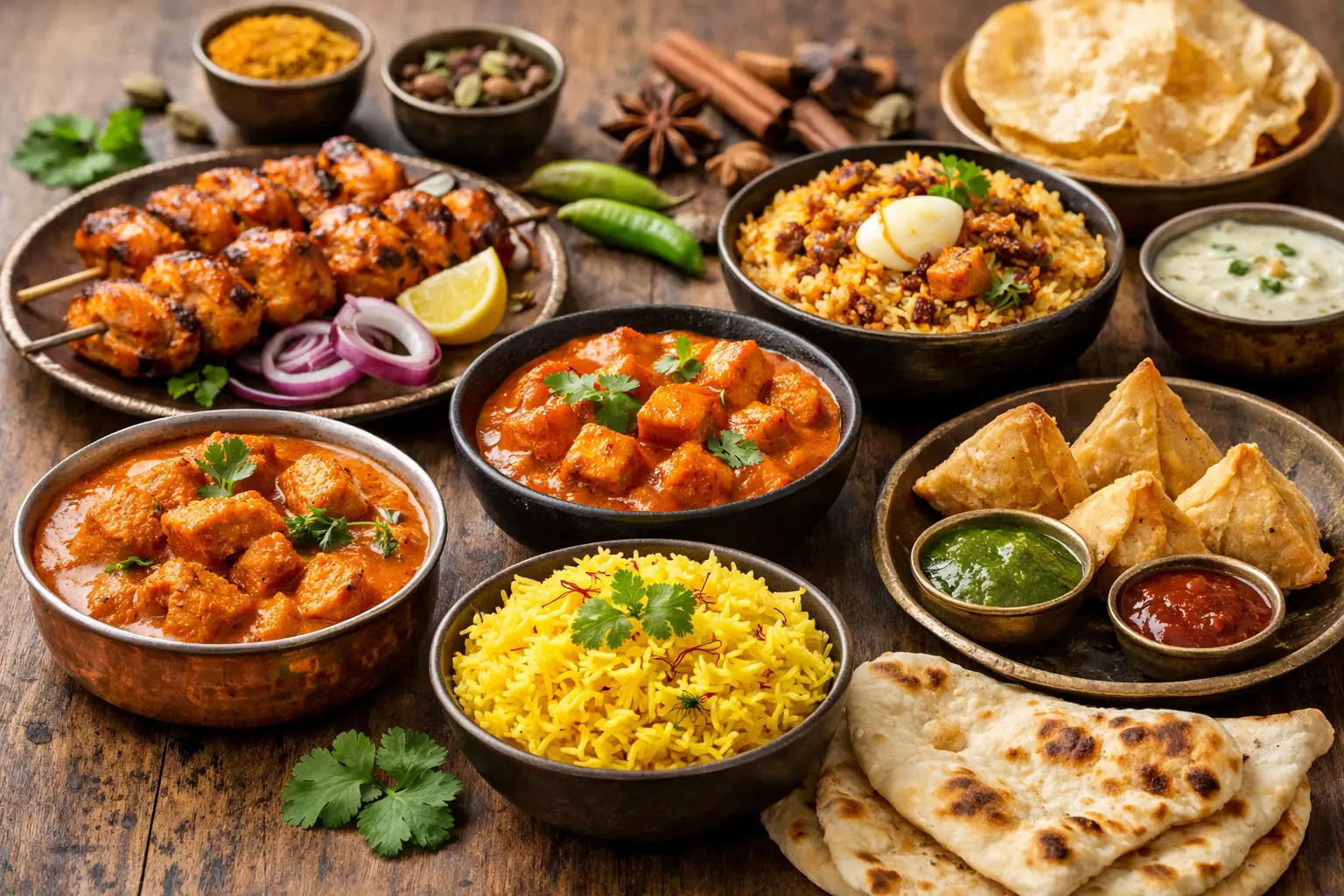
A few dishes often serve as the gateway into Indian cuisine, and for good reason. Butter chicken remains a favorite because it is smooth, savory, and easy to love. Chicken tikka masala offers a similar comfort, often with a slightly different balance of tomato, cream, and spice. Biryani stands out for its fragrant rice, layered meat or vegetables, and satisfying depth.
Tandoori dishes bring a different kind of appeal. Their char, color, and smoky aroma make them feel hearty without the weight of a heavy sauce. Then there are the essentials that complete the table – naan, roti, samosas, chutneys, and cooling yogurt-based sides that help balance richer flavors.
Vegetarian dishes deserve equal attention. Paneer cooked with spinach, lentils simmered with garlic and spice, and chickpea curries can be just as satisfying as meat-based options. For many diners, these become favorites rather than substitutes.
Spice level is personal, and that is a good thing
One reason some people hesitate with Indian food is the assumption that everything will be extremely spicy. The truth is much more welcoming. Many Indian dishes are flavorful without being hot, and in a good restaurant, spice can often be adjusted to match the guest.
That matters for families, mixed groups, and travelers who want to enjoy bold flavor without worrying about discomfort. A milder dish can still carry aroma, richness, and complexity. On the other hand, diners who truly enjoy heat should be able to find it as well.
The best experience comes when a restaurant respects both preferences. Hospitality is not about forcing a style on the guest. It is about helping each person enjoy the food at their own comfort level.
What to look for when choosing an Indian restaurant
Not every Indian menu delivers the same experience. The difference often shows up in the details. Freshly baked bread, carefully cooked rice, balanced sauces, and meats that remain tender all point to a kitchen that values quality. So does a staff that can guide guests toward dishes that fit their taste.
Atmosphere matters too. Indian food is at its best when it is served in a place that feels welcoming, not rushed. Guests should feel comfortable asking questions, sharing dishes, and settling in for a meal that feels cared for.
That is especially valuable in a destination dining setting, where people want more than convenience. They want authenticity, attentive service, and flavors that feel worth remembering. At Newa Chopstix, that same spirit shapes how Indian dishes are prepared and served – with respect for tradition, flexibility for guests, and the kind of warmth that makes dinner feel easy.
Indian cuisine in a Caribbean dining scene
In a place where visitors often expect standard vacation fare, a well-prepared Indian meal can be a welcome surprise. It offers something richer, more distinctive, and more personal than the usual routine. For locals, it becomes a reliable choice when the goal is real flavor and a meal that feels different from everyday dining.
That cross-cultural appeal is part of what makes Indian food such a strong fit in a diverse dining market. It is expressive, generous, and built for people who enjoy discovering something authentic. It can suit a casual lunch, a family dinner, a date night, or a larger table sharing multiple dishes.
And because the cuisine offers so much variety, it meets diners where they are. Some want comfort. Some want adventure. Some want the familiar with a little more character. Indian cuisine can do all of that when it is made with skill and served with genuine care.
The best way to understand Indian food is still the simplest one: order with an open mind, choose the spice level that suits you, and give yourself the chance to enjoy a meal that brings warmth to the table from the first bite to the last.